2nd Oxford International Tango Festival


Whilst heavy snow seals off Scotland, Wales, Northern Ireland, Lancashire, Cumbria, West Yorkshire and the Pennines, we set off from Darlington for Oxford – successfully skirting the snow falls of South Yorkshire and Derbyshire. Our destination is Miriam y Dante’s 2nd Oxford International Tango Festival, held this year as usual at Lady Margaret Hall just off Oxford city centre.

Calling via our guest house, Sandfield we head for The Simpkins Lee Theatre where Leandro Diaz (guitarra) and Mauro Mauceri (bandoneon) - Cosae Mandinga are to open the show. In truth, Cosae Mandinga are more than a band – they are the scent of autumn Jacaranda and  ripples of spring rain drops on a San Telmo roof.


Miriam y Dante have given me a task – to introduce the performers during this evening’s show. We arrive in the nick of time, catching Dante peering out over the snow covered lawns. “You’re late”, he admonishes, and leads me to the performers’ room. Here are tango dresses, bandoneons, shoes, maté and that delicious Argentine chaos. Yanina lifts a leg in greeting, and I turn to my task of learning names and the order of performance. Tonight Miriam Orcutt and Dante Culcuy will start the show, followed by Marcelo Ramer and Selva Mastroti, and finally Neri Piliu and Yanina Quiones.

The Simkins Lee Theatre was intended for lectures, but tonight it is the dramatic setting for Oxford’s top tango show. Seating 160 guests, the raked theatre is still sufficiently intimate to provide the closest connection between audience and performers. In centre stage are two seats and one microphone – all that is needed by Cosea Mandinga. I momentarily have the other microphone before the lights dim and the performance awakes with Leandro y Mauro’s ‘Milonga triste’.

This is the real start to ‘Oxford Aires’, the new, unofficial name for the festival – we feel the pulse of the Capital Federal – and the breath of a breeze from La Boca to Palermo. The dance performances have the skill of glittering professional dancers, whilst capturing the connection of friends – ours and theirs. The mid-show performance vignette from the students of Amarita Vargas adds an Andalucian colour and change of rhythm, and then back to Argentine tango at its darkest, and most vibrant.


Clutching our copies of Polenta by Cosea Mandinga, we leave for the Deneke Hall, but 40 metres away across the square. Here DJ Punto y Branca is already in full flow, with his seamless mix of tango, milonga y vals. We dance until 1.00 am, drag ourselves to a waiting taxi and return to a soft bed.

Saturday is the real day of action for the 2nd Oxford Tango Festival, with an early morning master class led by Yanina y Neri at 10.30 am, followed by beginner tango with Miriam y Dante. This year even Miriam’s brother-in-law has been tempted to tango and starts what will almost certainly be another fascinating tango journey. Marcelo y Selva deliver an intermediate workshop before we retire again to the Deneke Hall for our ‘Just Like the Old Times’ guided practica. For those not familiar with the concept, this is one of the most energising events – tango learned on the floor of the milonga, with ideas from each of the professionals, taking dance to greater heights – but without the anxiety of formal tuition. We took from it what we could, at the level we could access, and honed our skills across the floor.

Four more classes followed for leaders, followers, intermediate and improvers.

And then the Saturday Grand Ball.
The Deneke Hall provides something special for a Grand Ball – polished parquet flooring, oak panels and grand masters looking down on the dancers. Here is DJ Punto y Branca, followed by live tango from Cosae Mandinga; there the tangueras looking stunning in tango dresses and Comme il Fauts; with black suited tangueros and fancy footwork.

But the Oxford Tango Festival Grand Ball is not just about superb tango. It is about friendship, conversation – both danced and spoken – and about fun. Tonight, with tables removed, there is no place for cliques, but an open tango salon where tangueros from across Europe meet to dance and to exchange experience. This is one of the most inclusive places to ‘feel’ Argentine tango, and is the true realisation of 'Oxford Aires'.

After midnight, the tango performances. Miriam y Dante start the night with a tango and vals – Miriam’s expressive, flawless, ethereal delicacy  - Dante’s mastery character and humour. It has to end, but we do not want it to go. Our consolation is a following performance by Marcelo y Selva. They take tango from the air, and place it on the floor in a supremely exciting and totally connected performance of tango and milonga. The contrast adds joy to both. Finally, we turn to Neri y Yanina who dance tango with an expression that is, like a high altitude Malbec, infusing. But it is their final milonga that lights the night. This was one of those rare occasions that we experience perhaps once in a lifetime - where the performance transcends anything we have encountered before, and with the lift and excitement of the audience, moves far beyond that which was rehearsed. Here is a memory in the making – to which we can look back and say... “I was there”.

After another busy day of classes and guided practica on Sunday, tangueros gradually slip away to their distant homes, in France, Italy, Spain, USA and here in the UK. For us, a journey of 230 miles back to County Durham – from fantasy to normality, but taking with us the warm glow of friendship, companionship, and some fabulous dances.

Did you miss it? Well, if you are particularly good and book early, there is always next year!


re-post Milonga el Arrabal


Eight o’clock, and we have parked down by the Tyne. It’s an eight minute walk up the steep slopes of Side to the Royal Station Hotel, but the snow has gone, to be replaced by early evening revellers who teeter along the pavements in heels higher than you would ever see in any milonga. The Royal Station Hotel is the imposing Victorian building adjacent to the Central Station. Built between 1847 and 1850 by John Dobson, it was in fact opened by Queen Victoria. Yes, it’s convenient for the train and Metro, but unfortunately the last return to Darlington is too early for a proper night out by rail at ‘Milonga el Arrabal’.

At the top of the stone staircase leading from Neville Street, turn left from the wide entrance hall – or simply follow the strains of tango music wafting from the Balmoral Suite. Here the open door reveals a fully panelled room with blocked floor. This is true nineteenth century splendour, with high plaster-work ceilings and wall-mounted lighting. Immediately you are back in the 'golden age' of tango.

Tonight is the inaugural evening for Miriam y Dante’s milonga here at the Royal Station Hotel. Arriving early, we comprise some of the first dancers, but are quickly joined by a host of great tangueros, some local, and others like us who have travelled to the event. Now with black suede and Comme il Fauts we test the floor – which offers a perfect balance of speed and safety. We chose to sit across the room and cabeceo, lifting the occasion and reminding us of afternoons at 'La Ideal' or 'Café Tortoni' in Buenos Aires.

Biagi, Di Sarli, Canaro, Fresedo, D’Arienzo – and a touch of Nuevo – something for all tastes. Miriam’s playlist is a Smörgåsbord of delight. And how special that, as organiser, she dances with her guests. 11.30 pm comes round too soon. We hear that month week, Dante has a surprise for his tangueros. We can hardly wait to return!

The Milonga Villages of Manhattan


You need to live in New York to get the feel of Manhattan's milongas. Richard Lipkin's great guide is one of the best places to start, giving you the facts: the days, dates and links to events around the city. Then, there are the well-blogged subjective views of which are the busiest, the best, the ones that attract young dancers, and the favourites of the older milongueros. Of course, these cannot really form the best basis for choice - one man's meat is another woman's poison. And milongas, by their very nature, change. This month's most popular milonga becomes next month's graveyard. Perhaps the organiser is away, or the DJ has moved. Maybe re-decoration is underway and dancers stay away.

Being part of the Manhattan milonga scene for such a short time, this blogger does not seek to pick between  RoKo at Manhattan Ballroom, Ukranian East Village, Triangulo, Tango Cafe, La National or Tango Lounge. Nor, in doing so, would he want to take attention away from the missing gems he failed to visit whilst in Manhattan. Rather, this blog will tell the generic story of Argentine tango on the island, focussing on 'feel' and atmosphere of the New York tango scene. For the rest, you will simply have to dance your way around Manhattan and decide for yourself!

Mid September is a great time for tango in Manhattan. During the summer months, when temperatures soar and air conditioning machines hum cold air into the milonga studios, the tanguero is trapped between heat and chill. As the season turns, and New York settles into autumn (or 'fall'), the condensing units are switched off or down, and a gentle breeze drifts down with cooler Canadian air. Past are the prickly nights when shirts stick, and arrived is that short rest between the heat of summer and the Arctic chill of winter.

With the departure of summer visitors, the milongas are returned to the New Yorkers, together with those from neighbouring states that travel to dance in Manhattan. A quiet time, but one still blessed with able tangueros who love to dance.

We arrive in Manhattan at that moment when the New York weather forecasters are on the alert for change. A jacket or wrap may become necessary, but not quite yet. Perhaps an umbrella is wise, as showers flick in across what moments before was a clear blue sky.

Before arriving, I had pictured Manhattan as being divided North-South. Perhaps it is, but the Manhattan subway map tells another story; as do the Manhattan villages. The real divide for the visitor is, of course, East-West. Subway lines 1,2,3, A,C, 4,5 & 6 all run end to end, giving quick travel (especially on express lines 2 &3) along the island. The East-West divide is both physical and cultural - although lines E, 7 and L give small relief and continuity for the tourist.

So, for milongas, take Richard Lipkin's links and map their location. Manhattan comprises 23.7 square miles, is 13.4 miles long and is 2.3 miles at the widest point between Upper West Side and Yorkville. Check and plan your route, and note when exiting the subway, which way to turn. How I wished I had taken my compass! Consider too, a laminated city street map - small cost for great convenience.


Check also your return route, and keep your 7 day Metrocard, and the free subway map obtainable from the ticket office, to hand. Returning home after milongas by subway is not that bad - they run throughout the night and are sufficiently safe for the careful traveller. As in Buenos Aires, avoid an ostentatious show of wealth. Use a 'false wallet' if you travel alone, and separate your possessions. Travelling to a milonga, you need little other than your Metrocard, dance shoes, a jacket, bottle of water, the entry charge of up to $15, and something for a drink. And if your shoes are in a shoe bag, they will have little appeal to the passer-by. 


Coming from provincial England, with only Buenos Aires milonga experience to contrast, I was amazed to discover how many milongas were set up amongst the twinkling lights of the high-rise towers. If you have charted your principal choices of venues, it is not a bad idea to check their location when passing in the day. Some appear quite obscure, and their locations may well melt into a multitude of doors and blocks after dark. Note that some entries may need a code or specific bell to gain access to the elevator, which will whisk you up to the 4th floor or beyond before giving onto a corridor concealing the milonga doorway. A preparatory visit, email, text or phone call may save precious minutes trawling the street and avoid asking passers by who may not even recognise the word 'tango'!

As you would expect, each of the milongas has its own character and interest. The tango community of Manhattan is not huge, so you will encounter some of the keenest dancers at different venues throughout the week. These are often the people to ask - they will tell you where the dancers are meeting and which are the current favourites. Our experience of local tangueros is just how helpful they will be in this regard - so ask, and keep your pen and paper to hand to note the advice. For those travelling alone, consider taking a plain card bearing your name - something that sounds pretentious simply reminds those who you meet who you are - and that often smooths the way. 

I should add a few words about tandas. Visitors from Europe will have been brought up with the codigos de tango where an invitation means that the full tanda will be danced. This is not necessarily the case in New York. Even some apparently experienced dancers will terminate a tanda after one or two dances, much to the concern or disappointment of their partner. How could they! This may well be the subject of comment elsewhere in tango-blog land, but forewarning is helpful for those encountering this for the first time.

The standard of dancing throughout Manhattan varies considerably from milonga to milonga. Some are sharp and smart - La National, Triangulo, Milonga Roko - others are friendly and more informal - Ensueno and Central Park tango. Remember that all venues contain both joys and disappointments - and that an evening of tango is just one night of lifetime. The emphasis on cabeceo is not universal, but wherever possible should be tried first. Leads should not approach followers directly without first making some eye contact, and followers should announce their desire to be asked by presenting themselves actively as dancers, rather than women who wish to chat together. As in Buenos Aires, the better tangueros will refuse the direct request to dance.


And so, let us leave the Manhattan milonga scene at Milonga RoKo, 29 West 36th Street. It is Sunday evening. The elegant studio is set around with small tables. The bar offers complimentary water and snacks. Here are young, sophisticated dancers, even numbers of leaders and followers, and some expert tangueros - perhaps this is the Milonga 10 of Manhattan? For a moment, we sit and watch the dancers, soaking up style and content - seeing the smart RoKo society in full flow. Yet, at one side of the dance floor stands a lone figure. He will be perhaps seventy, with a look reminiscent of Albert Einstein, his wild white hair and crumpled suit. As the Canaro tanda starts, he enters the pista alone, making his way safely to the centre of the floor, where he dances. The young and daring dance around him, whilst he - in a world of his own - quietly moves to the music. This is the telling link with tango past - the new styles, steps and fashions pass him by, relationships come and go, and he tells us what we really need to understand. 


Englishman in Central Park, Manhattan


Throughout the summer there is tango in the park - Argentine tango around Shakespeare's statue just south of Sheep Meadow in Central Park, Manhattan. We are now well into September, nights are drawing in, and autumn sunshine is low as we arrive from Columbus Avenue. Within an hour, dusk will have gathered and shadows of dancers will be cast by the antique lamp stands that surround the square.

The music of Di Sarli, gentle but rhythmical, drifts across the grass as we approach on the park road. We cut north from 65th Street Transverse and follow the sound. Ahead, tangueros already circle the statue. Cast by John Quincy Adams Ward and unveiled here on the southern end of Literary Walk in 1872, Shakespeare looks down from his lofty plinth onto a hexagonal paved square. Around the base of the statue is the bag park, piled with sacks and coats, safe within the dancers' reach. Surrounding the square are benches, perfect for the cabeceo, although experience will suggest that invitation takes the place of cabeceo as the shadows fall.

As advised, we have left our best dance shoes in Harlem, and try our older pairs on the textured square. It is not as challenging as it appeared, perhaps with the seasons' tangueros polishing a little more of the concrete pavers each week. With care it it 'yes' to the pivot, the inner lanes being smoother and relatively unaffected by debris from the overhanging trees. This tanda is Laurenz - so we take to the pista to join swirling dancers as the park's pigeons take to their roosts. Here is a gentleness, the lyricism of the music being absorbed by the evening as the sun drops far away west across the Hudson.

For those visiting for the first time, arrive with a distinctive bag (so that you can spot it in the pile), a wrap, a dap of mosquito repelant (not a major issue) and maybe a folding umbrella should the weather change. Here in the park, you are a ten minute walk from the shelter of 66th Street and line 1, or Columbus Circle at Central Park South. Most women wear heels, but if you dance in flats, that's fine. I would advise the men to leave their best dance shoes at home and to wear a leather soled shoe. Bottles of water are available, but best come prepared. Should you spot the empanada tray, dip into the dollars and enjoy an authentic taste of Buenos Aires in Manhattan. During the evening, a hat is passed around for such contribution as you can afford. The organisers have real costs and make such effort that $5 per head is always welcome, although not essential, making this, no doubt, your most inexpensive dance in New York. Another tip is to arrive early (before 6.30 pm) and leave late (at 9.00 pm). The early arrivals get to chat and meet other dancers - the very best way to assure you of later tandas with your chosen tangueros. The later part of the evening is the most magical - when you feel Central Park against the skyline of Manhattan, and the warmth of the swell of dancers before leaving into the darkness and head to Central Park South, the lights, the traffic and the subway.

Unmissable are the characters of the park that seem to drop by.

Here, a grey haired woman dances silently on her own, giving an impressive lead to her invisible partner. Her life, flair and style bring a strange dignity to the square. She dances patiently, interpreting the music with joy, before she melts into the shadows until the next tanda.

Midway through the evening the quietness of Calo's 1942 Jamás retornarás is interrupted by the arrival of a strange figure. Not a tanguero, clearly, but a dancer all the same, Central Park's most prominent transvestite appears with a flurry of swishing skirts. This is 'Carmen Miranda' meets 'Gaga'.

photo by http://newyorkcityinthewitofaneye.com                                                                     photo by Cornelis Verwaal


With red, green and yellow beard, matching poodle and African Grey parrot, Ms Columbia is a regular visitor to tango. I decide against a cabeceo, but Ms Columbia would have almost certainly rejected it, preferring to dance with the poodle. When resting, her parrot takes a break from the swirl of tango aboard the poodle who seems quite oblivious to his presence.

After Ms Columbia's departure (she does not stay long) and Canaro's slow milongas, the evening settles into the quieteness of an autumn night. Above us to the south, the lights of the Plaza Hotel and Rockefeller Centre beyond, glint and wink in the sky. A dark cloud looms and a little rush of night air spins the crisp leaves that scatter into little pools. It is the last tanda of the evening, we change into walking shoes, and set off towards 57th Street. It is as if we have stepped away from a perpetual loop of tango, the music fading as we depart. Whilst not a classic tango venue, we leave a place of individuality, of warmth and lasting memories that are Manhattan.

Tango in New York


This year, New York takes the place of Buenos Aires for tango. With the support and advice of our group of dancers who have recently returned from dancing in tango's second capital, we are off to see for ourselves. The next series of posts will detail what we find, the favoured venues and the unmissable events.

Of course, any suggestions you may have will be most welcome!

Voodoo Milonga Club


In April 2012 a small group of visionaries met at the Cantina Voodoo Cafe, Darlington. Among them were the cafe proprietors, Les and Kendra, and the tango dancers, Stephen and Stephanie supported by their tanguero friends who just love to dance.

This was the moment that gave birth to a new tradition: the Voodoo Milonga Club. The idea was to create a new milonga experience in Darlington. For inspiration, we gazed back to the 1920's in Buenos Aires, when the early immigrants to Argentina who danced on the stone flags of La Boca, first got together to hire a room. This was what we would do - a meeting place where everyone could sit, relax, eat, drink, dance, watch, meet, chat and chill. Yes, those who wanted to dance could get up and dance or take the early faltering steps that eventually fascinate and ensnare the would-be dancer in tango. And those who simply want to watch, or listen to the intricate, delicious music from the Golden Age of tango, could do just that.

With our dance shoes strapped across our shoulders, Stephanie and I walked the historic gates of Darlington - through Houndgate, across Blackwellgate into Skinnergate where, at number 84, the Voodoo Cafe announced its presence with the faint sound of tango. The tables had been pulled to the sides of the room and the warm glow of the bar cast intimate shadows into quiet corners. The scene was authentic 1930's Buenos Aires.

Dancers and watchers arrived, to be met with smiles and hugs. A tradition of Buenos Aires is the greeting - the most important part of genuine connection between two people. In Argentina, the hug is ubiquitous, and so forms part of the Voodoo Milonga experience. Colin and Joan, Catherine and Phyllis, Geoff and Corinne, Jayne, Morgan and Kat, Greg and Sarah were the early arrivals, taking to the floor, or simply chatting and watching. Voices of English, Spanish, Haitian Creole and French curled like smoke amongst the tango music of Rodriguez, Donato, Canaro, Biagi and Verela. Shards of light were created by the contemporary tango of Otras Aires, Bajo Fondo and Gotan Project.

So, what of the future? Our tango dream has taken form. The Thursday haven of beautiful tango music and dance is now a new reality. A place where friends meet, enjoy an embrace, share a glass of Malbec or Champagne, taste the flavours of burritos, chimichanga, feijoadas and fajitas. An oasis of Latin culture in the sea of turbulent English life.

If you dance, perform, sing, play or simply love to soak up the atmosphere of something new and entirely different, join us at the Voodoo Milonga Cafe. It will probably change your life.

Argentine tango....where?


photo courtesy of  john hennessy

If you think slipping from the Pennine clouds into Cumbria does not seem the proper prelude for a milonga... wrong!

Leaving my home in Darlington for the Pennines meant exchanging light rain for heavy mist which encircles my little Smart car and gives the feeling of being raised on a vortex of cloud. From the Stainmore gap and Brough, the high A66 road drops gently into Westmorland - despite its' geographic assimilation into Cumbria I still see this lush and gentle landscape thus. The Gypsy and Romany travellers heading for the hills with their horse pulled caravans are now behind us, and ahead is their destination - the town of Appleby, where a famous horse market is held each year in the late Spring bank holiday. Down below, curls of woodsmoke rise from the red sandstone chimneys of the tiniest cottages, and the rich, sumptuous fields of the North West open towards spring-green woodland and raindrops on tousled cobwebs.

My ultimate destination is Dalston in Cumberland, a small village tossed around a green, bearing that well-washed Cumbria feel. Down on the right is the Victory Hall. After the First World War, the worthy and wealthy Cumbrians of Dalston subscribed to the project, and by 1921 Victory Hall opened its doors for the first time. Then, and for the next ninety years, the mainstay of social life in this remote backwater was to be the village dance. This was where young men met the lasses they would marry, and where after the wedding they would celebrate by dancing.

Today, the dance is not the Cumberland Square Eight (do look it up if you are not familiar with it) but more remote - from 7,000 Atlantic miles away - tango from Buenos Aires, Argentina. As the Smart car nestles into the smallest of spaces to the right of the hall's canopy, the sound of 'Vida Mía played by Osvaldo Fresedo's orchestra slips beneath the double doors that give onto the main hall. Inside, already dancers walk easily and gently on the polished wooden blocks, and the smell of old curtains is replaced by the scent of fresh baked cakes and tea. Yes, this is Tango in Cumbria's tea dance.

The tea dance is one of the most special events you could conceive. Imagine a table laden with fresh sandwiches, home made cakes and scones. Add to the mix an aromatic Darjeeling tea and the clink of tea cups on saucers. Now finish the picture with the sounds of tango, a late afternoon blackbird singing, and the swish and swirl of dancers. And there you have it....the tea dance.

Francesca has entreated those attending to come as 'Monarchists or Republicans', but being England's most remote county, there is not a Republican to be seen. Queen Victoria is here, as is Prince Albert, the current Queen's grandparents. In their shadow, we are but footman and lady-in-waiting - but it is Francesca that attracts the attention. She is the 'Pippa Middleton of Dalston', her delicious curves shown to great effect beneath her micro skirt: "I shall have to wear fewer clothes next time"...yes, Francesca, yes.

Today, Philip, event organiser (no relation to the Duke), has skillfully created a piece of Buenos Aires in Cumbria. We change into dancing shoes, mine the Darcos and Stephanie the Comme il Fauts. Then to the floor, to be wrapped in Cumbrian romance and later satiated with carrot cake, strawberry flan and Earl Grey. 

As the last of the late Spring showers taps the windows, giving way to shards of sunshine through the clouds, the music ends, tea cups are carried tinkling away, and the tango embrace ends. Who said that you need to be Argentine to host a milonga? Well, Dalston proves you wrong!


Flor de Milonga


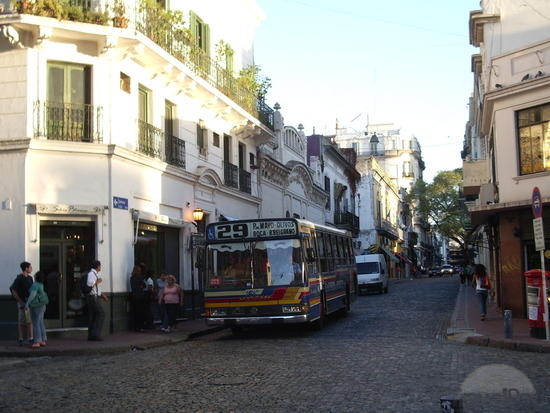
Colectivo no 10 tears along Chacabuco in the direction of Plaza Dorrego, San Telmo. I disembark at Carlos Calvo, the doors crashing to close, the engine screams, and the faces of the tired and weary stare out at me as they are propelled towards their homes in La Boca and Barracas.

With the bus departed, I am now strolling in gentle afternoon sunshine. Humberto Primo is quiet. A young couple sit on their doorstep, deep in conversation, an elderly woman sweeps her first floor balcony with a long handled broom, and the ancient, weather-beaten, unofficial parking attendant guides - with his grey duster - a rusting Ford Falcon into a tiny space.

My current destination is the bakery in Peru. There with a smile, and perhaps a free taster, I will be served with biscuits, bread and media lunas. Calling for fresh ground coffee (sin azucar) at the Chinese supermarket, I shall return home to El Sol, to relax on the roof terrace, observing the cloudless sky, with the sound of city below.

Today is Tuesday, and Tuesday in San Telmo means Flor de Milonga.

As my early readers will recall, on my first visit to Buenos Aires in 2007 I danced with Lucia at El Arranque. La flaca Lucia was described by the old milongueros as "their favourite tanguera". She started life as a waitress at a prominent milonga, but was soon in demand when the milongueros realised that she could dance...not just well, but without equal. Part of her fate -as a dancer - was then sealed. The other part was sealed by dancing with Gerry from Ireland, whose great charm was not to go un-noticed. They now share their lives and run Flor de Milonga together, assisted and enlivened by their playful daughter Michelle.

My tango shoes are strapped to my back as I slam and double lock the hostel's outside door. The air is cool, and darkness has dropped across the roofs of San Telmo. The streets themselves are never dark, unless shadowed by tall plane trees. I turn back towards Peru and within 5 minutes reach Avendia Independencia 572.

As ever, the milonga's secret is given away by the sound of tango, drifting from the upstairs balcony to the street. Just inside the doorway is the Flor de Milonga sign, and the staircase that ascends to the first floor studio. That sense of fascination rises each time I visit Lucia and Gerry's milonga. From the top of the stairs I see figures moving to music. Tonight the club is popular, but not too crowded, affording the rare opportunity to move on a milonga floor. Gerry greets me at the door, and Lucia blows a kiss. For those that haven't been to Flor de Milonga - this is a bohemian space that time forgot. If one could step back twenty, thirty years, Lucia y Gerry's forbearers would be circulating to some of the same tunes and dancing the same steps. There too would be the shadowy figure of a lone dancer in the corner of the room, and the pretty tanguera fastening her shoes. It is hard to imagine a trip to Buenos Aires without the Flor de Milonga magic.

I take a table by the pista and sip sparkling water. Her shoes, now secure, she accepts my cabeceo, and we dance. I sense the moonlight on the trees below the salon balcony. I hear a gentle breeze stir the leaves. And I am lost in tango as we dissolve amongst the dancers, seeking the secrets of Flor de Milonga.

End and Beginning

Not the usual preparation for a milonga. Our mood is subdued. Mid-winter light fades early, and curtains are pulled to keep out the cold. The little Smart car slips across the Tyne Bridge out towards Heaton and the Dexter Grosvenor Dance Centre. Tosson Terrace in north east Newcastle seems the last place you would expect to find a dance studio, and the black door at the bottom of a steep staircase only discloses its secret with the feint sound of Argentine tango.

Tonight is the milonga dedicated to Julian Dockery's life of tango. Julian's last task for us was to choose the music that he would have chosen, and to dance to the codigos de tango that he respected. The lighting is soft, early dancers circulate on the smooth block floor, the tables are decorated with flowers and chocolates, and Tricia performs her last tribute to Julian's memory.

Dance teachers from across the region are here, Robin has donated his milonga evening; Miriam is the DJ; Andi y Angie arrive, together with John Paul; and later Miriam y Dante will perform. Now, Donato's 'Sombra Guacha' brings tangueros to the floor, their gentle movement silhouetted against a flickering slideshow of Julian's youth.

Audrey, Julian's mother, has come from the Cotswolds in south west England for the event. This is the most poignant moment for her as she watches the dancers that shared her son's life of tango - most strangers to her, but in another sense familiar as part of the tango family that surrounded Julian. Their dancing tells his story; moments of joy, of sadness, of friends and of loss.

'Quiero Vierto una vez Naz' by Franciso Lumato and Bianco Bachichi's 'Cumparasita' signal the end of the evening. It represents a passing, but also the embracing of another spirit into the rich life of the tango community that we love.

Hard Times - For These Times

Hard times. Harder times to come. Here in Britain, John Humphries, the voice of doom on BBC Radio Four has just confirmed our worst suspicions: 2012 is to be a harder year than 2011, and maybe the hardest year yet.

Of course we tangueros share a history of overcoming adversity. Born in the depression years of the 1920's in Buenos Aires and Montevideo, the lyrics of tango described the most painful human hardships over two decades. These are the words that are woven into the tangos that we now dance. Our forbearers survived further economic depression and the rigours of military dictatorship from the 1950's for a further two decades. For half of it's young life, tango has been hidden, sad or repressed.

As dancers, we also know extreme hardship - of learning to dance Argentine tango. "It takes a lifetime and a half to learn to dance tango". Well, with so many of my years having been squandered in tango-less pursuit, I sense that even my reincarnation will struggle to get it right. Tango is a hard task master.

So, as tangueros, we are better equipped to face the rigours of life. A handful of pesos or pounds in our pocket, a pair of dance shoes in our bag, some music, a floor, and a smile on our face is all we need to press away the threats and fears, and to dance.

Leading up to Christmas time, as festive lights festoon the city, I attended the Newcastle Upon Tyne launch of Dere Street Barristers, my new chambers; and having an hour or so before the last train, what better time than to dance tango?

From the Castlegate Centre I drop down Pilgrim Street and Milk Market towards the Millennium bridge. The night air is clear and the city quiet, but for the calls of Kittiwakes that fly late in the city's sodium lights. The Quayside rests, awaiting the Friday night revellers dressed in tee shirts and tattoos. I do not linger, but head out east, in cooling air, along the Tyne walkways that will lead to Byker. Now, on the first bend in the river, the angular roofs of the Ouseburn Regeneration Centre point back towards Gateshead's Baltic tower. Fishing boats bob in the small marina and cables clink against steel masts. Then, the sound of tango - it filters across the rippling surface of the dock, taking me back to life in Puerto Madero, Buenos Aires. Here too, is the soft glow of light from the Boathouse doors that open onto port decking. As I approach I see the dancers, slowly swirling in close embrace.

Andi and Angie have finished their Boathouse class. As I enter, dancers take to the floor again. It is D'Arienzo and their dance smiles. Together with music and soft light, there is the hint of cocoa and vanilla from Andi's brownies. It feels like home at Christmas.

The milonga is the cornerstone of Argentine tango, and has a familiarity across the world. Whether in Argentina, Uruguay, North America or Europe, similar codigos mark the milonga from any other dance event. Here too at the Boathouse, the milongueros cabeceo their partners and embrace each other, as they shall at a hundred other locations this night. But tonight, the Boathouse will create its own particular, poignant memory. Their arrival is like a simple breath, unnoticed save by those who rest between dances. Their first dance was like a seamless mix of mate into the milonga. Yet, for a moment they pause for a breath at the side of the pista.

Over the past few months, Julian y Tricia have kept step with the milonga, travelling across counties and arriving in autumn downpours or winter winds. Tonight is harder, with tango exacting a heavier toll as Julian struggles, but still smiles. "A change of cylinder will put air under my feet", he says as he snaps the connector and lifts the harness to his shoulders, before heading for the floor to dance.

This is the last time I will see Julian. It is his penultimate dance with his friends. Later, they leave as the last words of Miguel Calo's Jamas Retornaras sung by Raul Beron, drift across the pista. In seven days time we will mourn the passing of a brave tanguero, and the little Boathouse community that was so rich with his friendship, will be poorer with his loss.


2012: Warmth and the Scent of blossom


No no, I am not in Buenos Aires; and therein may be the problem. The English winter has been kind enough to date, with almost balmy Christmas temperatures. But my Google weather chart tells me that it is 27c in Buenos Aires, and the messages from tangueros there speak of hot summer mornings, vibrant blossom and the sound of crickets by day; and steamy, exciting, thronged milongas by night. Most of all, the latest request from Rudi y Linde to meet them for cocktails on the roof terrace of El Sol, has caused my feet to itch.

But this year I am to miss my annual visit, determining to stay back and work at my recent projects:  my new chambers Dere Street Barristers; my new family mediation project, Divorce Without Pain;  and JAST Public Sector Mediation, a joint venture with my friend John Armstrong, due to be launched in April 2012. Coupled with this, Miles my 19 year old son has embarked on three expensive years study of Drama and Directing at the University of Hull, and I would dearly like to leave him debt-free.

That does not preclude me from feeling the loss; and in those unguarded moments, having my mind pulled back to the street life of San Telmo, the edginess of La Boca, the bourgeois sophistication of Recoleta, and the open ease of Palermo where broken pavements glint after summer downpours, lovers linger under the shade of large Jacaranda trees, and the sound of tango drifts across the breeze with a shimmer.

Blmurch
Back in 2007 I wrote a Travellers' Survival Guide for Buenos Aires, which I have just updated and re-posted for 2012. It is intended to provide help the first time visitor. Do let me know if it has been of assistance.

In the meantime, it is back to an English winter; and dreams.

Teatro Colón Buenos Aires

When I first came to Buenos Aires in 2007, Teatro Colón was closed for restoration. The outside of the theatre was entombed in scaffold and plastic, like a large badly wrapped parcel, water cascaded down the steps from under the wooden doors from massive internal cleaning, as if a bath had overflowed. So Teatro Colón was to remain a hidden secret, containing more hidden secrets just faintly illuminated by the guide book descriptions of its former splendour.

Amongst the top five opera houses in the world, Teatro Colón boasts some of the best acoustics for both theatre and opera. In this it is unique. The cornerstone for the current building was laid in 1889 and the theatre opened in 1908, at a time when massive immigration from Europe singled Argentina out as a distinct rival to the United States of America as one of the world's most prospering countries. The theatre was fabulously ambitious and seats nearly 2,500, making it larger than the Royal Opera House Covent Garden. Its restoration over four years, cost in excess of $100- million, involving 1,500 workers, including 130 architects and engineers. The scale of both the theatre and its restoration covered a staggering 60,000 square meters. So how could I resist the invitation to take a tour of this fascinating and hitherto unknown building.

We met at Galeria Güemes, an art nouveau edifice designed by Italian architect, Francesco Gianotti in the centre of Buenos Aires at Calle Florida 165. Galeria Güemes was to be the hors d'oeuvres for the main course of Teatro Colon. The internal doors open to the stairs and lifts soar in steel, bronze and brass detail up towards the huge glass domes way above. It scintillates with opulence and design, colour, beveled glass and sculpture. On the 4th floor, accessed from the second lift, I found Edda reading Marcel Proust's 'A la Recherche du Temps Perdu' after her pilates class. Our walk to Teatro Colón represented a short stroll up Calle Lavalle and across Avenida Julio 9. Ahead was the theatre, like a large square palace positioned impressively beyond the 21st lane.

Edda had visited Teatro Colón previously, perhaps several times, and so was to be the perfect guide. Not only did she know about the theatre's history, but she had a sense of its place in history and the culture of the Portenos. After buying our tour tickets and meeting the official guide, we separated from the hub of the group so that I could enjoy Edda's bespoke denouement of the theatre's secrets in Edda's mix of English, French and Castillano.

Entry to the threatre is the first theatrical experience. The entrance hall is opulent beyond opulence, with pink, white and yellow marble from Italy and Portugal, mosaics from Venice, stained glass and mirrors from Paris, sculpture from Italian and Argentine artists and enough gold leaf to make the Bank of England shudder with envy. The ceilings rise to giddy heights surmounted by wonderful frescoes, some original, some restored. The furniture is contemporary with the construction of the threatre - from Paris. My musing was broken by Edda's beckoning as she lifted her skirts to skip up the white marble staircases leading up to the gallery before the auditorium. Here on the first floor was a gallery reminiscent of the best Loire palace, in length, in height, in depth, in glass, in light, in fabrics, in painting and in sculpture. But of course the best lay beyond. Edda walked behind me as I entered, her small light hands across my eyes so that I could not see what awaited. Not until we reached the front rail of the first gallery did she withdraw her blindfold. And there, ahead, spreading out across 2,000 seats in the richest red velvet, with 7 tiers of galleries from auditorium to ceiling, was the threatre. In a horse-shoe shape, the auditorium is surrounded by boxes comprising from 7 to 30 seats. Entry to each one is through wonderful heavy brocade fabric, pulled back and secured to form part of the threatre's acoustic. At the highest level way above the auditorium are seats surrounded by standing for 500 people who, for 30 pesos, would gaze down on the spendour of the threatre and capture glimpses of the stage. Beneath the theatre, extending way out below Avenida Julio 9 are the subteranean passages and rehearsal rooms, one 20 x 20 x 30 metres, the same dimensions as the stage. Above all is the cupola, a massive dome repainted in 1966 by the 20th century Argentine artist Raúl Soldi. It replaced the earlier painting which crashed to the floor following the pre-air conditioning habit of placing ice on the cupola to cool the threatre. And in the centre of the dome was a chandelier containing 700 light bulbs and weighing over 1.5 tons. It will bear the weight of a choir of 17 singers who replicate the ethereal voices from the heavens. Once I had taken in the scope and dimension of the theatre, I was again instructed by Edda to wait by the rail as she vanished through the brocade. A minute later she reappeared, this time in the President's box way over to the side of the stage, where she stepped forward dramatically, now her blonde hair pulled back like Eva Peron, to waive and to blow kisses to her people.

When we left to go out into the sunlight, the noise, the traffic and hubub of the city, Teatro Colón seemed almost like a dream, a secluded moment of fantastic opulence. Our next stop in 600 metres would be Cafe Paulin, Sarmiento 365, which my readers will recognise from last year's blog as the narrowest cafe in Buenos Aires, to sit upright on tall stools tightly pressed against the counter, to eat toastados and salad. Such are the contrasts of this wonderful city.

Virginia Tola

Can you sense it? I have fallen in love! Two nights ago I spent the evening with a beautiful, sensual woman with whom I travelled to the stars and back. Her name is Virginia, and she was born in Santa Fe, Argentina. She is a singer. In fact, a soprano. Her voice is like silk drawn across skin, until she ascends in her almost unlimited register - when one's skin is covered with goose bumps, the silk flies on the wind, and one's heart reduced to jelly.

I have to admit that she and I were not alone, although when she looked penetratingly into my eyes, I felt that we were one. A supporting singer called Placido Domingo was also present for some of the time, as were 149,999 other opera lovers who were levered into 1 kilometre of 20 lanes of Avenida Julio 9th by Obelisco in the centre of Buenos Aires. This was one of the free concerts sponsored by the Capital Federal, attended by the average population of 10 square kilometres of the city. One week ago, Edda had queued for over two hours for the allotted two tickets. Clutching them, she returned to San Telmo triumphantly and waved them beneath my nose, telling me that if I did exactly as she asked, I could share her prize. So after my week of devoted attention, rewarded we made our way on the number 9 colectivo out across the furthest points of Avenidas Independencia, Belgrano, Mayo and Corrientes, arriving at Obelisco in the heart of the city.

Our tickets were in 'sector A' where we arrived 2 hours before the performance; but were still over 80 metres back from the stage. Ahead of us was space reserved for another guest and her friends, about which I will speak later. Alongside our seats were the speakers and huge screens that would be repeated as far as Avenida Cordoba. Once at our seats we stood to gaze across heads that extended behind us further than one could see. This was a pulsating, excited landscape of faces - every age of child to the elderly - from rich Portenos to cartoneros - all expectant - all waiting to witness the opportunity of lifetime - to enrich their lives with beautiful music.

As we sat, talked, and ate nuts coated in creamy toffee from a passing vendor, or occasionally rose to stroll, the hot day drew to a close, the blossom continued to drop from the trees, parakeets flew erratically in small formations to their roosts, and a light cool breeze stirred the air. Edda pulled her cashmere top over her arms and shared her shawl, draping it tenderly across my shoulders. Night began to settle, the ark lights came on and the screens burst into life. Just at that moment, the crowd began to rise, their arms waving in the air. The deafening sound of a helicopter sending whirring paper and leafs high into the sky signalled her arrival. Ahead of us, it touched down and we realised why we were positioned back from the stage. Cristina Kirchner, the President of Argentina, stepped down, just like Eva Peron, and the show was ready to proceed.

The crowd had little time for a half-hearted slow hand-clap before the conductor of the vast Orchestra de Colon entered stage right. The cacophany of tuning ceased and the orchestra launched into a rousing prelude. The crowd, many of whom had spent the day in the city centre for El Dia de la Memoria, 35 years after the abolition of the dictatorship, went silent as the still night air and the magic of the evening commenced.

It would be hard, and is unnecessary to list the pieces performed, or to speak of the richness and diversity of Placido Domingo's voice, shaped by years of character. His charisma needs no further embellishment from me, nor would his wonderful humorous performance be enhanced by my words. But when from the wings the slim body of the beautiful Virginia Tola entered the stage, a spell was spun that would capture each and every heart. For a moment she stood. The conductor looked carefully towards her to await her nod. 150,000 faces looked out with expectation. The orchestra strained awaiting her first note. My heart stood still. Her voice soared. Our lives and appreciation of the female voice were changed for ever. From that moment, in a tangled love afair between me, Virginia and Placido, I, along with thousands of souls, was transported in time and space - away from the crowd - the Obelisco - the gathering gloom - the cares of life: in sunlight, by rich textures, the bright cerise of her dress and the pure gold of her voice.

The varied programme comprised opera, operetta and the popular music of Buenos Aires. It was the latter which finally roused the crowd. 'Besame Mucho', formerly so cheesy, here brought the whole audience to their feet to sing and to hug, and Edda lifted her face towards mine and blew a kiss. It was over two hours later, when Placido and Virginia had sung their last tango and 'Querida Buenos Aires', that the realities of existence were to creep back from where they had been banished. The orchestra, during the second half of the concert conducted by Placido Domingo with an energy that stopped one's breath, took their last bow. The stars departed the stage and the double bass player lowered his stand. In my moment of disorientation, Edda looked searchingly into my face. "Are you alright?", she asked with care and concern. "I'll be fine", I rejoined - knowing that whilst swept by the crowd, arm in arm into Suipacha towards San Telmo, my heart would be pinned for ever to one of life's most magical musical memories.

Late Summer in Buenos Aires

Whilst at Flor de Milonga, the bohemian tango event run by my friends Lucia and Gerry, I felt it. The tall doors were open leading to balconies above the busy street of Independencia, and the fans stirred the air; yet there was a weight that came from the heat and humidity. Dancers drifted from the milonga pista towards the night air to catch the last remnants of a breeze. The energy that was Buenos Aires at night seemed to soften. Then, during the night came the rain, heavy, almost unbearably as it cut through the hot humidity, first fizzing on the broken pavements, then washing them in rivulets and streams. Now, as I sit and write, the morning light is grey and the cloud low. This does not portend well for Placido Domingo's open air concert at Obelisco tonight. Preparations started over two weeks ago, with huge stands, barriers and rows of folding chairs set out over four acres of Avendia 9 de Julio, the 20 lane road that disects the Capital Federal. I suspect that they will remain empty whilst the set will be like a grounded ship in a sea of puddles.

Over the last two weeks Buenos Aires has been sumptuous in sunshine, crystal light and positive energy. It is hard to imagine that late March means the approach of autumn. But across the city, the Jacaranda trees have started to float in pools of blossom as the flowers fell to the ground, mirroring the bright pink canopy. This should have been the sign, and probably was to the Portenos of Buenos Aires. A further sign was the need to pull the thin cotton sheet from the foot of the bed to give comfort as the cool night air breathed through the shutters here in El Sol.

So the season matures and prepares to pass. I sense my last three weeks have started to carry me to my return to Europe. Now, as I listen to the falling rain and the colectivos splashing past, England seems not so distant. Olivia has just passed my door wearing a large plastic sack that sticks to her long, slim, shapely legs, but does not distract from her winning smile as she calls to me. El Sol's roof patio is deserted, save for Delphine preparing breakfast and slipping quickly back to her room. We are like the Jacaranda flowers, still blooming but preparing for the fall back to another reality and our navigation in a world of change.

Cafe life

I am sitting alone in a cafe here in San Telmo. The day is bright and sunny. Rather than the pavement table, I have chosen one by the open window, the casement pushed high and I rest my right elbow on the window ledge so the sun catches my sleeve. Jackie, the waitress smiled a beam, just like the morning sunshine, and without a word exchanged, returned with cafe con leche, two media lunas and a tiny glass of sparking water. She also must have sensed my hunger as the media lunas were joined by two small squares of cake, little gifts that sometimes accompany an unaccompanied coffee.

Today the light is special in the way in which it flashes - with the occasional high passing cloud, and the windows of the passing colectivos. Whilst the city council has sought to address the plumes of diesel smoke emanating from their engines, they have not got on top of the sound. I hear them approach, their engines whine, the brakes squeal, the doors bang, and the gear change is many decibels too late as they scream away from the bus stop. The one opposite as I note is decorated inside with mirrors and plush blinds at the windscreen; the control panel is covered in simulated fur. The driver adds to the noise with his transistor radio that is playing tango. It is now departing with a flurry of activity, and as it shakes and screams off, there are more flashes of light from a dozen rattling windows and the eyes of crowding, standing passengers.


Here inside the cafe is relatively peaceful. The oak panels are dark as are the table tops which display large paper placemats and a chrome container of the most fragile tissues bearing the cafe logo. The cafe con leche is hot and strong, and the media lunas deceptively sweet. I dip one into my coffee and taste Buenos Aires. I sip the sparkling water, which effervesces on my tongue and gives intensity to the coffee. Around me, just as in the street outside, is all of San Telmo society - the tradesmen, the tourists, the shop workers, the street workers, the lovers, the retired, simply meeting to chat.

It tells me what I most miss about Buenos Aires when I return to England. It is the natural contact between people who live to share their thoughts, views, worries and delights. I watch the touches, the smiles, the caresses, the gestures and the kiss. Opposite, two elderly men rise from their table, their small cups of cortado empty, and they hug - an embrace that speaks of parting with respect and affection, of shared past and wishes for the future. It is both strong and tender, and utterly un-self conscious. In leading our lives, we still have a lot to learn from other cultures, connections and ages. Perhaps now is the time to put away the the cyber contact and to feel something real. So, as you close my blog today, sense the hug like a breath and feel the value of something very real.

Temazcal

In glorious summer sunshine, days have a habit of slipping quietly into weeks; and so it is since I last wrote on my blog. But today, there is something very special to tell you. So, sit up and listen to my latest tale.

Eva and I met on the corner of Humberto Primo and Chacabuco. She is to visit her friends Hippolato y Katerina and I have been invited. Before we met, her instruction to me was to bring a towel, wear little, and be prepared to strip. My mind flashed, as it would, over roof-top swimming pools or sun-drenched beaches, but such are rather rare here in Buenos Aires. So tonight was to be a surprise and I did as instructed.

The carnival bands were already meeting up, with city buses decanting dancers and singers into Chacabuco for the short walk through to San Juan. They were gaudy and noisy, with loud shouts, trumpets, and drums. Carnival seems to last continuously from February through to March, with parades and pagents, and drumming through to the early hours of the morning. Yes, you need to be young at heart to survive carnival.

But as the dancers gather, we slip by, to stop at an almost invisible doorway set back in Chacabuco. Eva presses the bell and after what seems an age, Hippolato arrives to give us entry down the long, wide, green corridor that leads to small apartments occupied by the poorer families of San Telmo. Hippolato is not tall, but his strong Mexican Indian features draw the eye, as does the way he moves. He is like a cat, pinching the ground as he walks, his long jet black hair tied into a tail which flows as he walks, just as his loose Indian trousers catch the slight breeze.We quickly arrive at double doors that lead to a small enclosed court yard. And there is the secret of the evening: the temazcal.

Here, I suspect that I need to hold your hand. A temazcal is a Mexican sauna. Hippolato has already woven slim bamboo canes into a structure that resembles something between a tepee and an igloo. It is low, with a circular frame, sufficient to seat four, and a domed roof that rises from the tiled floor. In the corner of the court yard are animal skin to seal the temazcal, and a brazier of hot rocks. These are volcanic stones from Popocapteptl and are glowing white hot.

We greet. Katerina, Hippolato's young wife holds their baby who beams on the arrival of strangers. Water and fresh fruit are offered and we sit on chairs and stools to watch the last points of construction of the temazcal. Now Hippolato seals it, with heavy rocks to hold the skins and large sheets of plastic thrown over to contain the humidity. Gently, we are invited to leave our clothes to be cleansed with incense vapours which rise from a hot rock placed in a large goblet. Each of us in turn is covered in gentle swirls of aromas, and then invited into the temazcal. We sit on towels and the hot rocks follow us, piled by the doorway straight onto the tiled floor. In one corner is a large bowl of basil; in another, a flask of hot anise water which will be spashed from a large bunch of basil leaves over the hot rocks causing scalding aromatic steam to rise and fill the structure.

As the temazcal commences, Hippolato incants mother earth and thanks her for her blessings.
“Agua mi sangre, Tierra mi cuerpo, Aire mi aliento, Y Fuego mi espíritu.” “Water my blood, Earth my body, Air my breath, And Fire my Spirit.”
The moment is charged with energy. Silence falls as the temperature soars. Now the only sound is of Katerina's baby suckling. His first temazcal was at the age to 9 weeks, so he is a veteran, whilst Eva and hold our knees, feeling the humidity rise, tasting the basil and fennel at the back of our throats in a wonderfully hot and pleasurable process. With more water, further clouds of scalding aromatic steam rise into the tepee and the temperature and humidity rise. The incantation was accompanied by songs and blessings; the process being repeated three times over about an hour, with a short moment of fresh cool air whilst the hot stones were refreshed. When the heat gets too strong, we take handfuls of basil leaves and hold them to our noses, or press them against our bodies. It is totally fabulous as an experience and also as a sensation. Afterwards we take a cool shower and, still naked, feast in the court yard on cheese, olives, home made sun-dried tomatoes, bread and water.

Later,Eva and I return, rising up Chacabuco towards the sound of the carnival. We have left our green oasis and walk towards the bustle of San Telmo. Our skin feels soft and our faces fresh, our step is light. Parting, we return to our private worlds, but feel changed. This experience has been both physical and spiritual - yet another step along the wonderful, wild and free journey of life in Argentina and South America.

Sunday afternoon in Plaza Dorrego


Of course you know Plaza Dorrego in San Telmo. Everyone does. It is at the foot of Defensa. If you visit Buenos Aires it is one of the essential visits, whether as a tourist, a traveller or a tango dancer. You will recall from my earlier blogs the street atmosphere of Defensa, the street through San Telmo that is pedestrianised on Sundays to make way for the traders, performers, touts and tourists. The whole length of Defensa is transformed into a microcosm of city life, an ants nest of activity which to the observer seems like disorder. But each person has their place - the street performers who perspire in the hot Sunday sunshine, the police officer who leans lazily in the shadows to smoke a cigarette, the baker parking his cycle laidan with churrios, the tourists who pull notes from a thousand wallets to buy their gifts for loved ones at home.

When I arrive, the sun has already started to sink behind the roofs of San Telmo, and the narrow streets are gathering a night-fall gloom. Lights now twinkle, and the hustle of the day settles into the wind-down of the evening. Traders are packing up, and pushing away folded stalls on handcarts. The wheels rumble on the cobbles. I sit in a street side café with Anemone sipping strong beer and talking about her 1400k journey alone through Argentina. The waiter returns and bows with the bill. Anemone seems to have this effect on men; one of deferential appreciation.

We are not here simply to drink beer, but to dance. Music is drifting from the plaza, competing with the other San Telmo sounds, like a busy orchestra tuning. We walk to the square, our arms linked so that Anemone can protect her valued heels. The open air milonga is under-way. A large crowd of spectators is gathered around handfuls of dancers who take small, delicate steps on the recently laid and non-to-easy flooring. Pedro "El Indio" Benavente organises this milonga, providing the sound system and the floor, together with his commentaries and glorious music. He is tall for an Argentine, handsome with dark hair pulled into a pony tail.

We join the floor and nod to Don Bernabe who is the senior milonguero. His acknowledgement is the seal of approval that says "Yes, you are welcome if you dance in a straight line and observe the codigios". For Anemone and I this is our first dance together. She is beautiful and draws the eyes of the crowd. I take her into my embrace in which unusually for her, she is able to dance tall. We settle and wait. I initiate a change of weight and then our first step. Two bodies are to be one on Plaza Dorrego and I am to be a happy man. The dance has a feeling of ease, our stride evenly matched, our weight equally balanced and our intention seamlessly directed in unity. I sense that the crowded floor opens ever-so-slightly for us as we progress and I note the envious looks on the faces of the tangueras watching her feet as they wait to dance. We create a romantic dream, parting reality and fantasy to embody the possibilities of tango.

We dance until Chacarera interrupts the tango. Now local dancers claim the floor for two songs of folk music and dance. Here is energy, a dance of flirtation and conquest. Compared with tango it is explosive and totally intentional. Involving turns, display and courting, it culminates in the possibility of a kiss. The boys who secure a partner for Chacarera rush to become men, the girls who start the dance complete it as women. It is impossible to be ambivalent about chacarera; it is the exciting life-blood of the Argentine mating game.

It is now getting late to eat, so we slope with friends down Bolivar to Horacios' cafe. Horacio is simply the 'Moso'- waiter, but he embodies all of the character of San Telmo, slim, artesan with curly hair and the voice of performance. A visit is not necessarily for the food, but for the essential and unique atmosphere of this family owned café. Mother waits in the day, and her son cooks by night. Horacio, adopted by the restaurant as a boy, is still here as a man. He greets each customer as brother, sister, father or mother and describes the simple food in such terms that choice is almost impossible. Then, without warning he will smile and come to the rescue, "I would try the bife, Mister, it is, how do we say....delicious!", and the decision is made.

We leave as the streets are almost empty. Anemone and her friends seek an illusive taxi back to Palermo, and I part with an embrace to stroll, clutching my dance shoes, back to Chacabuco and Fabrizio's. As I turn the corner into Humberto Primo it is like leaving a glitzy show, a performance of life, where colour and music blend with movement and aspiration. Now is the moment to reflect on the true hues of Buenos Aires and the possibilities of tango in San Telmo.

Confiteria Ideal

If you have not heard of Confiteria Ideal you have not heard of tango.

Today it has rained. The huge clap of thunder this morning signalled a gorgeous downpour that cleaned the air and washed the streets. Only afterwards did the pair of blackbirds start to sing, and steam rose from the evaporating pavements. After a light lunch of avocado, bread and soft cheese - with home made chimichurri vinaigrette, I strolled out through San Telmo, crossing Av de Mayo at the centre of the city and turning right into Suipacha. There at 380 is Confiteria Ideal. The entrance is imposing in a lost century way. The cafe dates back to 1912 and is in the Parisian fashion of 'glittering splendour'. Manuel Rosendo Fernandez was its founder and his beautiful French wife was its inspiration. The tea room is on the ground floor, with marble, mirrors, wrought iron and dark wood panels. Between the tables, set with white starched cloths, is a sense of space - as if at any moment this place could evaporate in time like the earlier rain. It is faded elegance at its best.

I do not linger at the ground level, but follow the turned marble staircase and music. Above is a large, airy salon, the floor again marble, surrounded by tables set with red cloths. The first impression for the Argentine tango dancer is that one has either come home or gone to heaven. There is a quality to the atmosphere which says, "You will leave this place but it will always be within you". My hosts are Rudi and Linde who have arrived early to dance and secured the best table with the support of the best waiter at the head of the room, where I join them. We embrace and sit together sipping chilled sparkling water. It is 3,00 pm and small handful of elegant dancers grace the floor for Diego Alvaro y Zoraida Fontclara’s afternoon milonga. I prepare to test my new dance shoes.

For the cynical tangueros amongst you who may read this blog, I have to correct one thing. Despite the presence of tourists (now the life-blood of tango here in Buenos Aires), Confiteria Ideal is still unsurpassed as a venue for dancing. The floor is large, the room cooled by fans rather than chilled by air conditioning, and the music soft and lyrical. Here are exquisite dancers of all ages who take joy in dance. If your experience of Ideal is not of the best, visit on a Friday afternoon before mid April each year, and accept my cabeceo. Together we will weave the dream afresh to restore your faith in dancing in this place.

Club Gricel Thursday night

I left you, my dear reader, as I left the terrace here at El Sol de San Telmo to prepare for a night of dancing at Club Gricel. This was to be only my second visit to Gricel, the first being back in 2007 when Anna and her Danish companions invited me to join them for an evening of indulgent tango. You will recall, on that occasion, my steps at Gricel were somewhat faltering, but were later improved by champagne whilst dancing until sunrise on the roof of Anna's downtown hotel.

I decided that I would walk off the effects of my glorious pizza from Moderna at the corner of Chacabuco y Humberto Primo by taking the straight route from Chacabuco to La Rioja. For those who do not like walking, first, do not come to Buenos Aires, and second, do not attempt this journey. But for me it was an adventure to skirt the barios of Monserrat, San Cristobal and the dangerous Constiucion. Proceeding west on San Juan, one leaves the comfort of familiar streets to pass along the principal Avendia that separates the coping from the poor. To the north is a recognisable Buenos Aires, to the south is the area that Portenos tend to shun and tourists never see.

As I pass along the Avendia, local families are sitting on the steps to their homes, drinking in the night air despite the passing traffic. Outside the caged shop fronts, I smell a whiff of cannabis and to my right see the local youths have taken over the garage forecourt as a makeshift football pitch. Gradually, the full parillas give way to cafes, and the crisp linen table cloths gives way to shiny plastic. The walk is a brisk 35 minutes when La Rioja appears as if from nowhere and presents a left turn to the shabby doors of Club Gricel. It is now 25 pesos to enter the milonga (currently about £4.50). I wait inside the door to be shown to a table. The organiser does this personally after a handshake and brief words of welcome. I am placed at at table with other men, all mature and clearly regular dancers here. Club Gricel does not operate a segregation of men and women, so to my left and right the regular dancers are seated, in order of precedence, the older more venerated, and the exceptional dancers claiming floor-side tables. I settle, having changed my shoes in the entrance way, order still water (8 pesos) from a passing waitress, and examine the dancers. Here the trick is to wait. Do not act in haste. Watch and learn the codigios of the milonga, identify dancers who may be available to your cabeceo, and only then secure a dance.

Behind me is a dancer of considerable experience who returns to her seat. I wait. As the first dance of the tanda starts she has not accepted an invitation. As the next song starts I turn and catch her glance. She nods, I rise, I invite and she accompanies me towards the dance floor where she accepts my embrace. This is the design point for the whole tanda, where dances are made or lost. She settles into my arms and the music does the rest. Dancing with her is an easy delight, unhurried and savoring moments both of movement and of stillness. The floor is crowded so there is no room for bold moves; nor would these be appropriate at Gricel, one of the more traditional milongas. At the conclusion of each song we wait for the next, and the dancers to take up their embraces and start to move. These moments are intended for small talk, which I avoid. I have come to dance and not to question my partners. Again, we settle into the embrace, this time with the familiarity of having completed a first dance, and slip into a stream of dancers who describe little pools of life and connection.

Later, I catch Suzie's eye. She has been dancing with the local milongueros, so I start with trepidation. Our first couple of dances are somewhat stiff, but then, with a breath, we relax into each other's arms and pulse with the energy of dance. It is now evident that we are well matched, she is taller than the average tanguera, and slim, her long legs taking what I lead in her stride. Later, she returns to her milongueros and I have some lovely dances with both local women and tango visitors. Suzie and I come together for a final dance in which we melt into the floor, and after to a passing taxi to be whisked back down San Juan to Chacabuco and El Sol, where I depart, leaving Suzie to complete her journey to Park Lezame.

Chacabuco 1181 and roof life

I am here on the terrace of Fabrizio's in Chacabuco, San Telmo. It is really the roof rather than a terrace, with terracotta tiles which soak up the late morning sun and radiate soft light. Liberally and strategically placed across the roof are large tubs containing plants and trees, some reaching up to 15 feet in height, positioned to make bowers of green and gold. The sparrow now hops from tree to bower and descends to the terrace long enough to inspect the small trail of ants that carry fragments of leaves shredded from an nearby plant. He spots Astor, Fabrizio's cat and flutters to the safety of a cypress.


After last night in this very place on the terrace, where Fabrizio entertained a handful of his departing Australian dance students with many handfuls of empanadas and more bottles of wine, an event which he generously asked me to join, I am sensing a leisurely day in which I fancy doing nothing but sitting, watching and writing. It seems that have much opportunity. Fabrizio is providing entertainment on the next stage of the roof, inspecting and maintaining his creation. It is a solar water system, that appears to involve many meters of pipework, threaded with plastic water bottles to create polytunnels to heat the water as it returns to the roof-top tank. How ingenious, and costing a fraction of the commercial price, which would of course be un-affordable here. Whilst he works, I sit and sip my fresh coffee, glancing up to experience the return of Delphine, young, beautiful, fresh and French, wearing a simple black dress that shows her youthful figure. She edits films in Paris and has taken four months away to dance tango, learn Castillano, perform yoga, party and sleep. On meeting, curiously I feel at home in her company. We sit together and chat, in French and in English. And then she departs for her Spanish class, I exhale and catch Fabrizio's watching eye. My coffee is now cold, but I still find it strangely warming.

At the end of the terrace is a simple summer house, constructed in plywood with a plastic sheet roof. This is Fabrizio's summer home, from which he will return to the house as the autumn draws in and the guests leave. Vanessa is a midwife, but presents as a 19 year old college girl with a winning smile. Not speaking English, our short conversations are entirely visual with smiles and gestures. She dances Zouk, and Fabrizio is the reigning Zouk king. Perhaps before I leave, tempted with sufficient bottles of Malbec, we may be able to persuade them to dance an exhibition for us? Here on the roof, anything seems to be possible.

Those of you who followed my previous blogs will remember Iguassu. Yes, you principally know it as the world famous waterfalls that dramatically separate Argentina from Brasil, but I know it as the terrace waterfall, six feet in height, built in layered slate. As I sit, water cascades its full length into the circular lily pond beneath. In the proportions of the terrace, it is a dramatic feature, and one in which now my sparrow delights as it bathes and drinks the cool, clear water flowing from a ledge. Like the true Iguassu it now separates the sparrow from the cat. Squinting at it through reflected sunlight, it has the character of a ecological mountain down which disparate streams flow, to join, separate, and fall before disappearing into the lily pool.

I now pull myself together and back to the present. Which stream of life shall I follow today? Will it involve tango? Will it take me to dance, to join and separate at the end of a tanda, fall and eventually disappear into the pool of life? Like so much here in Buenos Aires, the answer arrives as the question is asked. My Galaxy tab tings and I have one message: "Meet at Club Gricel tonight, La Rioja 1180, dancing til dawn, Suzie"

Back to Buenos Aires

It is Tuesday and I am underway traveling from London to Buenos Aires via Madrid. This is the start of my latest adventure to learn the secrets of dancing Argentine tango, and to tell you about it, so my new blog. Welcome on board.

With the usual delays we are now mid Atlantic having left Spain, and are now flying one hour late. Although my Galaxy tab tells me its 1631 hours GMT, we have recently been fed lunch and the blinds of our Airbus Industrie A321 7 seat wide 350 capacity plane have been drawn. Is this because it is 1331 hours Buenos Aires time and we are simply expected to siesta? Perhaps it is because the cabin crew want to confine us to our seats to give them respite from our demands. There is a further option to do with turbulence here half way across the world. Whilst the middle aged French couple to my left are sleeping, I am typing and ignoring this possibility and the in-flight film which seems to add to the soporific effect of the late (or early) afternoon.

Well, you didn't visit my blog to hear about in-flight trials, but about the life of a traveler in Argentina. And it may appear that you have arrived prematurely, just as I spoke too soon about turbulence which now lifts, drops and rocks our plane, and seems to toss it from side to side like a fairground ride.

But I have to tell you about this part of the journey as it is so vast and forms the first important bridge between your world and mine. You are probably working away whilst I am traveling. If in England you may be suffering cold winter nights and I am on my way to hot summer days. As the miles tick away, it feels as if I am moving to a parallel universe where demands and responsibilities are to be replaced by opportunities and dancing. And yes, hopefully I am on my way to new tango experiences which it will be my pleasure to tell you about shortly on arrival.

La Viruta Armenia 1366

The missing post - from 2010, but worth revisiting

Pizza at midnight left us with an appetite to dance. Liana, Miles, Charlotte and I sat round the table and agreed. It had to be La Viruta. Our tango master Fabrizio informed us that the real dancers arrive after 3 am, so we should stay the night; and that is precisely what we did.

We are buzzing on Pizza Moderna's 'Especia' and limonada. Liana and Charlotte talk shoes which they exchange and in which they turn to each other for the next affirming comment. Miles and I are of little assistance here; we love them all as they lift curvacious calves and bring acute prettiness to their feet. For our part, we throw our only pair of dance shoes into a small rucksack and then set off to hail a cab. Within 30 minutes we are in Palermo, riding the storm culverts which slow the sensible motorist to almost walking pace, whilst the reckless or unwary grind their axles on the concrete sills. And here, as we turn into Armenia, is La Viruta. The milonga is held in the building known as Association Armenia. This is Armenia and here are all the Armeninans, from all parts of the globe including Armenia. Before we exit his cab, our driver tells us about the Armenian alphabet and plays Armenian tango. But at the top of a wide, descending staircase, the last connection with Armenia drifts away as we go down into Club La Viruta.

The room is large, the ceiling is low, the music is loud, the floor is heaving with dancers, and almost all of the tables around the floor are taken. Somehow we manage to source a table against the long wall; other dancers have just left leaving a vacuum to be filled. We are now equipped with our dance shoes and sparkling water. We are ready to dance. This is a maiden voyage for Liana who is new to tango, but she is in good hands. Before leaving El Sol de San Telmo she has received all the tips a tanguera would need. "Try this, avoid that, listen to the music, if in doubt, don't do anything". Charlotte has provided the finishing touches suggesting some decorations which transform movement into dance. And we dance. Liana insists that the floor is full before she will take the plunge. She need not have worried; she is a dancer and her movement starts to flow as we disappear into the crowd, as if swallowed up by a single pulsating organism with hundreds of waving tentacles.

La Viruta is very distinctive in its appeal. This is not a formal milonga, although the wise tangueros will use the 'cabeceo' to secure their dance, a remote contract across some space that allows the follower to decline or fail to accept. Occasionally this convention is broken and there will be a frosty refusal to those who do not follow the code. The age group is diverse; there are older dancers, but the majority are young, just like us as I assimilate the youth of my companions. This is a hip venue, not totally overrun by tourists, still retaining credibility with local dancers.

I cabeceo a young tanguera. She nods and rises on my approach. I take her to the floor and only then realise the extent of her beauty, her long blonde hair flowing down her back. She leans into me, places her temple against the side of my face and invites me to take her on a journey, which we do. Parting at the end of the tanda is tentative, our fingers release, she kisses me, I lead her to her seat. It is like a minute love affair, the objects being beauty, imagination and tango, all secured through an embrace. Later we will dance Salsa and rock, in tandas of different dances that add to the distinction of La Viruta.

My female companions observe the most striking of dancers tonight. She has a beauty that calls for comment, both in her appearance and in her dance. She is one of the Russian tangueras who are now stealing hearts and imaginations. She is in demand, rarely resting between tandas, but she accepts my cabeceo. Here is the most supreme challenge. Her skill separates her from all around her and when we dance it is as if silk has been brushed across my lips. Her movement is astonishingly light, but present, her balance is perfection, her expression sublime. We are to dance a full tanda, and then extend the exquisite moments as the band strikes up and takes me further to the ecstacy of tango. I feel her softness through the embrace, I catch for the fraction of a second that I can spare, the longing looks of other dancers. I now have another definition of heaven. Now the moment of parting is almost a bereavement as I release her to dance with other milongueros, who too will enjoy moments of bliss.

It is now after 3 am. Somehow the tourists have vanished without me noticing, but I do notice those who replace them. The salon is still packed, but now with real dancers such as Jose Carlos Romero Vedia who organises the street dancers of Lavalle/Florida; those who teach, those who perform and those whose passion is so great that they will dance into the early hours of the morning. Now, we do not dance but watch. This is the world's best caberet of tango.

6 am, the music fades and the lights rise. Morning coffee and medialunas beckon as we exit into Armenia and daylight. A row of taxis await and anesthetised by dance we slip back to San Telmo with windows down to admit the fresh scent of late summer blossom.