Buenos Aires and Tango. I escaped for 6 months to dance and live in Buenos Aires. This blog tells of my adventures then, my time in Argentina since, and my tango journey through life.
Recall to Buenos Aires
Now in the last two months before a return to Buenos Aires, its time to blog.
This next trip will span 2016 into 2017 - with departure early December and return in April.
Our first destination will be Monserrat - to assist friends in relation to their well known and loved tango house; after which we will be returning to Defensa, San Telmo for six weeks.
With a four month visit, drawing upon a total of fifteen months in the city, we aim to post a regular update, giving the flavour of a day in the Capital Federal. We will be covering some of the more unusual places and events, visiting new milongas, adding a food and restaurant guide, and describing how the city works for the visitor day and night.
Subscribe to the blog to join the experience. Who knows, it may inspire your next visit!
Review - Tangueros' top ten travel necessities for Buenos Aire
In my last blog I listed items that will protect or enhance your trip to Argentina.
I should add that I have no connection with any manufacturer, and no financial interest in any of the products. Clearly, I cannot guarantee any one of them. I review them simply because as a seasoned traveller they make sense to me.
SECURITY PRODUCTS
Travelling anywhere in the world poses risks. The art of travel is to limit them in a proportionate way. Argentina poses no more unmanageable risk than parts of Europe - in Barcelona many travellers are victims of crime. When examining risk, we look at simple steps that will lower the chance of you being a target, and give added peace of mind.
1. Travel Blue Sliding Wallet
For me, this travel wallet - having used many alternatives - is the best so far.
Street robbery is rare. More likely is simple, unnoticed theft. This may be accompanied by distraction (having your clothes sprayed with a grey-green substance, followed by offers to help clean it off), or opportunist theft (pick pocketing). Pick pockets habitually seek easy targets, and these are male tourists who carry their wallet in trouser jacket pocket; or female tourists carrying a handbag.
The Travel Blue sliding wallet is a perfect answer. Attached securely to your belt by a thick security strap, the travel wallet slips fairly easily below your clothing, either inside your trousers or up inside your shirt. 25 cms in length, it folds in half with a firm velcro fastening. Opened out, it is evidently very light, but tough and secure, coming with a two year guarantee. To the left are three vertical pockets for credit cards, held by internal velcro strap. This makes for easy removal by its owner when the wallet is open. For bank notes there is a lengthwise slide compartment, beneath which is a further zip compartment. Coins can be contained in a mesh section to the right, although I question why one would add the weight and bulk of coins to the wallet. Additionally, there are two small slide pockets -one for a photocopy of your passport.
I like this wallet because the fabric is robust, but soft and pliable when concealed under clothing. It is particularly comfortable against the skin, allowing you to place it under a shirt, or better, slip it below the belt inside trousers or a skirt.
I rate the travel wallet with 9* out of 10.
2. Protector III Personal Alarm
Do you really need a personal alarm when travelling? No, perhaps you do not. But this particular personal alarm doubles as a property alarm, or to secure an hotel/hostel door, and this is why I always carry one.
The alarm with a back-clip, 8 x 5.5 cms, is light weight - you will scarcely notice it - and very robust. Mine is 10 years old and still going strong. Battery life (3 x AAA) is excellent, lasting well between annual trips.
On the street, I use the alarm inside my shoulder bag, with the strap attached to my clothing. At open air milongas, the strap can be easily attached to a fixture leaving you safe in the knowledge that if someone takes your bag, they certainly will not hang onto it once the pin is pulled.
I rate the Protector Personal Alarm gets 10* out of 10.
3. Super 48 Key-Bak
House and room security is taken seriously in Buenos Aires, and you will find that you pass through several locking doors before you gain access to your apartment or hotel/hostel room (unless digital or 24 hour attended). So keeping your keys safe and easily to hand is really important.
I rate the Super 48 Key-Bak gets 9* out of 10
4. Ledlenser K4R Key ring torch
There are times in Buenos Aires when you really need a light. Returning home from a milonga at 3 am and negotiating a dark passage - arriving at a venue and looking for the door bell - facing a power cut and searching for a candle - getting to your door and locating the key hole. Need I go on?
The advantage of the Ledlenser is that it is utterly tiny and almost weightless at 17g. Just 50mm x 22mm (smaller than a little finger) and rechargable, it gives all the light you will need from a key ring torch, and saves pulling out your smartphone in a darkend place.
I rate the Ledlenser 7* out of 10
5. Transparent back pack
Men may take one look and reject this item - but most women immediately realise its worth.
Bag snatches are not uncommon. Thieves are looking for high value items, such as cameras, computers, tablets, iphones, wallets/purses and travel documents - and tourists often carry them in back packs. So, what better than to advertise the contents of your bag to the world? A pair of dance shoes, a pack of tissues and a lipstick are hardly worth stealing - and the mere fact that you carry a transparent bag signals that you have nothing to hide.The bag has almost zero weight, and will pack flat in the bottom of your suitcase. Once in Buenos Aires, this can be your dance bag for milongas. The transparent vinyl is surprisingly robust, it has a fabric base and strong adjustable straps, with additional carry handles and side pockets.
You may need to order this item via the USA, but in our view it is worth the wait and cost.
The transparent back pack gets 10* out of 10
6. Casio Unisex Watch
The last thing you want on your travels in Argentina is your Rolex. When out and about you simply want a water resistant watch to tell the time. This watch is almost ideal, and at a great throw-away price.
The Casio watch says 'I am not worth stealing' and sends a further security message about the wearer. With clear numbers and second hand, it fits lightly and snugly to the wrist. Battery life is good, although you may wish to change the plastic strap for a light leather one. It lacks an alarm, but compensates in neatness. And who expects to meet a deadline in Buenos Aires? This is truly a 'unisex' watch. At 6'2" I have two.The Casio Unisex watch gets 8* out of 10
COMMUNICATION ELECTRONICS
7. Zendure A3 Portable charger
If you are the type of traveller that leaves technology behind, this is not for you. But most of us these days carry an array of electronic items, each requiring their own individual wall charger plug. And so we end up with a bag of plugs and wires, together with an array of adapters needed for charging in England before we leave, and in Argentina after we have arrived.
The Zendure portable charger eliminates this problem, allowing you to charge each of your electronic devices by USB from a 204g hand-held device either at your hotel/hostel/apartment - or on the move. This way, you need never have a flat phone or failed ipad.
The Zendure A3 portable charger gets 9* out of 10
8. Bose Mini Bluetooth Speaker
Am I weighing you down with unnecessary electronics? In relation to the Bose SoundLink I sense not.
This blog is written principally for the travelling tanguero, for whom tango music is essential. It is not the same simply listening through a pair of headphones - there are times when you want quality sound through a speaker in your hotel/hostel room, a dance studio or in your apartment.
Most hired dance studios have an ipod/mp3 compatible connecting sound system, but unusually in your hotel or hostel - and in the apartment you will need cables to connect through the TV sound system.
Numerous trips to Buenos Aires have compelled me to take a portable sound system with me. This has been a pair of computer speakers, with the limitation that they cannot be used remotely and need to be powered. With the Bose SoundLink you say farewell to all of that. This device, which works independently of mains power, will connect by bluetooth or cable to your device, making it utterly convenient in every setting. Weighing in at 0.66kg - but with excellent sound quality, order this with the travel case, adding a further 159g.
The Bose SounLink Mini Bluetooth Speaker II gets 9* out of 10
9. UK extension lead with USB
When travelling to Argentina, I always take an extension lead with me. It means that I can operate every electrical item from the mains with only one universal travel adapter, and charge up items immediately following a 14 hour flight.
The link above is for a combination lead giving two UK power points and two USB. Alternatively, consider a multi extension lead for Argentina.
A power lead gets 10* out of 10
10. Universal Basin plug
Neither hand basins nor kitchen sinks have plugs in Argentina - only the English seem to wash in standing water! Is this a luxury item, or a necessity? Either way, consider buying an inexpensive plug and pop it in your case.
A basin plug gets 7* out of 10
Numerous trips to Buenos Aires have compelled me to take a portable sound system with me. This has been a pair of computer speakers, with the limitation that they cannot be used remotely and need to be powered. With the Bose SoundLink you say farewell to all of that. This device, which works independently of mains power, will connect by bluetooth or cable to your device, making it utterly convenient in every setting. Weighing in at 0.66kg - but with excellent sound quality, order this with the travel case, adding a further 159g.
The Bose SounLink Mini Bluetooth Speaker II gets 9* out of 10
9. UK extension lead with USB
When travelling to Argentina, I always take an extension lead with me. It means that I can operate every electrical item from the mains with only one universal travel adapter, and charge up items immediately following a 14 hour flight.
The link above is for a combination lead giving two UK power points and two USB. Alternatively, consider a multi extension lead for Argentina.
A power lead gets 10* out of 10
10. Universal Basin plug
Neither hand basins nor kitchen sinks have plugs in Argentina - only the English seem to wash in standing water! Is this a luxury item, or a necessity? Either way, consider buying an inexpensive plug and pop it in your case.A basin plug gets 7* out of 10
Travellers Survival Guide to Buenos Aires 2016
I prepared this guide in 2007 following my 6 month stay in Buenos Aires; but readers request that I update and re-post. So, here is the 2016 edition - prepared specifically for tango dancers.
WHEN TO GO, HOW LONG FOR, WHAT FLIGHT, WHERE STAY?
When to go and how long for?
Buenos Aires (BsAs) has an area of 80 square miles and a population of 3 million. Flights from London take approximately 14-17 hours, covering a distance of 7,000 miles. So this is definitely long haul to southern hemisphere. This is why we recommend at least 3 weeks in BsAs, and if you plan to travel further afield, take 4-6 weeks for your first trip.
As a southern hemisphere city, the best time to visit is either spring (late September to mid November), or autumn (mid February to late April). Spring in BsAs offers fresher weather with the Jacaranda in full bloom. Autumn is more mellow and relaxed.
Both seasons have their attractions. Bear in mind that June, July and August can be quite cold; and December and January quite hot, hence the better 'out of season' flight offers.
What flight and where to stay?
Only one rule in booking an airline - not via the USA unless you have an entry visa and propose to break your journey there. Even with close connecting flights you are required to exit flight-side in the States and return through intensive immigration control, including baggage/importation checks. Our experience of this is traumatic, especially if your connecting flight is within a 3 hour slot, which you probably won't make. So, whilst flights via USA may be competitive in price, they will be hard work, and substantially longer.
We suggest either direct flights from Heathrow to BsAs with British Airways (13.5 hrs), or regular connecting flights via Madrid/Paris if on a tighter budget.
Pre-booking accommodation in BsAs is not essential, but is advisable. Serious tango dancers tend to avoid regular hotels, taking tango hotels, tango houses, or tango hostels. They have the added advantage of providing contact with other tangueros who can show you the ropes and introduce you to the milongas. Those wanting independence will find a wide selection of apartments for rent via Airbnb - follow this link if you are not currently signed up (we get a reward if you do!)
Popular places to stay are Recoleta (smart and central), Palermo (lively and leafy), Monserrat (central with traditional milongas), and San Telmo (Bohemian and artistic). My personal preference is San Telmo, hence my San Telmo Facebook group.
BEFORE YOU GO
Currency
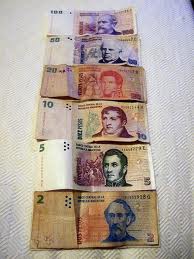
Currency in Argentina is the Peso (AR$). Notes come in 500/200/100/ 50/ 20/ 5/ 2 denominations and coins in 2, 1 peso. Be aware that some prices are shown in US$ so it is advisable to check currency conversion rates before you buy. Euros have some, and £sterling little value. We suggest that you pre-buy 5,000 pesos in the UK to cover your immediate expenditure on arrival. Whilst in BsAs you may use cash points (with premium charges) or Azimo money transfers - which is our choice.
Smart packing
We often carry excessive luggage and pack too much. BsAs is a thriving, exciting, international city where you can buy almost anything you would ever want at competitive prices. The exceptions are - electronic items and English tea. So why take items you can buy there?
Lost or mislaid baggage on arrival is a habitual problem with South America flights, and there have been occasions when passengers and baggage are not reunited for several days. If you co-travel, split your packing between suitcases. If solo, ensure that you have the basics for two days in your hand baggage allowance.
Here are a few suggested items to add to your usual luggage:

Electric points in BsAs have unique two point diagonal connectors. With a UK power lead and a single adaptor (available throughout BsAs) you can connect your mobile phone, computer and other items for simultaneous charging, and add your UK hair dryer and other equipment. Consider too, a portable power charger for your phone, tablet and camera if you are out for a long day and evening milonga.
Stephanie and I recommend that you take your mp3 player and portable speaker system for any trip - useful in hostels, apartments and rented dance studios, giving you tango music when and where you need it. Keep them in your hand baggage during transit.
For security peace of mind, you may also wish to take a good quality travel wallet, theft-deterrent light rucksack, property protection alarm, Keybak with belt clip, a cheap water resistant watch which need not be removed at customs, and a mini torch for the times you arrive late night back at your apartment.
We recommend that you take several photocopies of your passport - such are frequently needed for i/d - and store a digital copy securely on the cloud for easy access in the case of loss. I also photograph and store details of each credit/debit card, together with a record for cancellation phone numbers.
Before leaving Europe, ensure that your phone roaming is either covered by contract or switched off to avoid roaming charges on data.
THE FLIGHT
With a long flight in mind we recommend that you consider an upgrade if affordable, or preferential seating if not. With a minimum of 14 hours flight time, some preparation is wise. Consider support socks, neck support, eyeshades, phone and ear phones (Bose noise cancellation if you can afford them). Keep your passport (or photocopy), a pen and details of your destination address to hand - you will need these to fill in the entry forms that are distributed in the lead up to landing. Exercise frequently and drink plenty of water during the flight, for dehydration is an issue. Take a pashmina for warmth on the plane, and later when returning from milongas - it will double as a sarong during your stay.
BsAs International Airport
EZEIZA (also occasionally called Ministro Pistirini) is 22 miles (35kms) from the city centre. There are two terminals A and B which are adjacent and connected by a 5 minute semi-covered walkway. Your flight will generally arrive at terminal A but may be diverted to terminal B, smaller and more intimate.
GETTING TO YOUR HOTEL OR APARTMENT
Travel to the city takes 30-40 minutes by coach or taxi.
We have mentioned Tienda Leon which I habitually use on arrival, not least because it is safe, stress free and good value for up to two passengers. By coach, purchase a ticket that gives connection to your hotel or apartment. Hand your cases to the driver who will give you a ticket receipt. The coach will head for the city coach terminal, a safe area where you will transfer (in time) to a usually shared, included price taxi that will drop you outside your destination. Yes, this adds up to 20 minutes to your journey, but is part of the exciting arrival experience, and gives a good view of the city.
If you are to take a taxi from the airport pre-book a remis in the exit hall, or take a black and yellow cab from the airport concourse. Agree the taxi fare in advance for this journey as it falls outside the metered fare and will involve toll charges enroute.
STEPS WHEN YOU ARRIVE IN BUENOS AIRES
So you have arrived! What a relief.
As with any South American country, security is taken seriously, so familiarise yourself with the house rules and keep your keys securely. You are exhausted, but resist the temptation to collapse straight away. Have a brief stroll around your bario (neighbourhood). Take a bag, find a local supermarket and buy some water, bottle of wine, cheese, fruit, coffee (without added sugar - 'sin azúcar), tea and fruit for your room or apartment. Buy a cheap folding umbrella. Locate your nearest cash machine and friendly bar. Return to unpack and rest. Tomorrow, the city!
DOs AND DON'Ts IN THE CITY
Our top ten hints - for simple safety whilst travelling
BsAs is essentially a safe city, although as with any South American city, poverty raises an incidence of crime. For this reason alone, we suggest:
1. Carry only what you need, and nothing more. Keep your house keys accessible on your key-back.
2. Avoid wearing watches, jewellery (including costume jewellery) or expensive cameras that will draw attention. Wear your cheap water resistant watch.
3. When drawing cash, ensure that it is safely placed before you leave the ATM; and secure your wallet or purse before leaving shops.
4. Never keep cash in a back pocket, and split larger amounts between bags or wallets. Consider carrying a 'false wallet' - with expired credit card and small notes.
5. Choose your handbag with care. A rucksack style bag is more difficult to dip or snatch, and the clear plastic variety has advantages. In busy areas, consider carrying a bag to your front rather than your back.
6. Take only radio taxis (black and yellow), write down your destination before you leave, and hand it to the driver. For your return journey, carry a piece of paper with your address. Keep smaller notes to one side for your taxi fare to avoid being short changed or given false notes.

7. Keep your sube pass handy before entering the subte (underground) or boarding the colectivo (bus). Take extra care on the subte, planning your journey in advance.
8. In cafes or restaurants, avoid putting your bag or sack on the floor or pavement. Keep it secure on your lap, attach to your leg, or use the high shelves provided in some cafes.
9. When out and about, if stranger/s approach you do not engage - stranger contact is not part of the culture here. Move into the road/open space and draw attention. ’'Spray and help' - the old trick of spraying green or grey paste and then offering to help clean your clothes - this means danger. Disengage and move away immediately.
10. Walk with purpose and don't worry. Those who appear diffident are the visible targets for street crime.
GETTING THE MOST OUT OF YOUR TRIP
Use Hoy Milonga to locate your choice of milongas.
Use Omnia Lineas to work out which colectivo (bus) is best for your journey.
Tipping: 10% in restaurants and cafes, small notes for theatre or cinema kiosks, a porter or ticket staff at the milonga, and if you have a favourite milonga, treat the waitress with a good tip to get a decent table! Not expected to tip taxi drivers.
WHEN TO GO, HOW LONG FOR, WHAT FLIGHT, WHERE STAY?
When to go and how long for?
Buenos Aires (BsAs) has an area of 80 square miles and a population of 3 million. Flights from London take approximately 14-17 hours, covering a distance of 7,000 miles. So this is definitely long haul to southern hemisphere. This is why we recommend at least 3 weeks in BsAs, and if you plan to travel further afield, take 4-6 weeks for your first trip.
As a southern hemisphere city, the best time to visit is either spring (late September to mid November), or autumn (mid February to late April). Spring in BsAs offers fresher weather with the Jacaranda in full bloom. Autumn is more mellow and relaxed.
Both seasons have their attractions. Bear in mind that June, July and August can be quite cold; and December and January quite hot, hence the better 'out of season' flight offers.
What flight and where to stay?
Only one rule in booking an airline - not via the USA unless you have an entry visa and propose to break your journey there. Even with close connecting flights you are required to exit flight-side in the States and return through intensive immigration control, including baggage/importation checks. Our experience of this is traumatic, especially if your connecting flight is within a 3 hour slot, which you probably won't make. So, whilst flights via USA may be competitive in price, they will be hard work, and substantially longer.
We suggest either direct flights from Heathrow to BsAs with British Airways (13.5 hrs), or regular connecting flights via Madrid/Paris if on a tighter budget.
Pre-booking accommodation in BsAs is not essential, but is advisable. Serious tango dancers tend to avoid regular hotels, taking tango hotels, tango houses, or tango hostels. They have the added advantage of providing contact with other tangueros who can show you the ropes and introduce you to the milongas. Those wanting independence will find a wide selection of apartments for rent via Airbnb - follow this link if you are not currently signed up (we get a reward if you do!)
Popular places to stay are Recoleta (smart and central), Palermo (lively and leafy), Monserrat (central with traditional milongas), and San Telmo (Bohemian and artistic). My personal preference is San Telmo, hence my San Telmo Facebook group.
BEFORE YOU GO
Currency
Currency in Argentina is the Peso (AR$). Notes come in 500/200/100/ 50/ 20/ 5/ 2 denominations and coins in 2, 1 peso. Be aware that some prices are shown in US$ so it is advisable to check currency conversion rates before you buy. Euros have some, and £sterling little value. We suggest that you pre-buy 5,000 pesos in the UK to cover your immediate expenditure on arrival. Whilst in BsAs you may use cash points (with premium charges) or Azimo money transfers - which is our choice.
For credit cards, we recommend Halifax Clarity - giving the best, charge free rates for travel outside Europe. Apply for the card at least 2 months before your travel date. Follow Martin's link above and scroll down to his 'Best Buys'.
Smart packing
We often carry excessive luggage and pack too much. BsAs is a thriving, exciting, international city where you can buy almost anything you would ever want at competitive prices. The exceptions are - electronic items and English tea. So why take items you can buy there?
Lost or mislaid baggage on arrival is a habitual problem with South America flights, and there have been occasions when passengers and baggage are not reunited for several days. If you co-travel, split your packing between suitcases. If solo, ensure that you have the basics for two days in your hand baggage allowance.
Here are a few suggested items to add to your usual luggage:

Electric points in BsAs have unique two point diagonal connectors. With a UK power lead and a single adaptor (available throughout BsAs) you can connect your mobile phone, computer and other items for simultaneous charging, and add your UK hair dryer and other equipment. Consider too, a portable power charger for your phone, tablet and camera if you are out for a long day and evening milonga.
Stephanie and I recommend that you take your mp3 player and portable speaker system for any trip - useful in hostels, apartments and rented dance studios, giving you tango music when and where you need it. Keep them in your hand baggage during transit.
For security peace of mind, you may also wish to take a good quality travel wallet, theft-deterrent light rucksack, property protection alarm, Keybak with belt clip, a cheap water resistant watch which need not be removed at customs, and a mini torch for the times you arrive late night back at your apartment.
We recommend that you take several photocopies of your passport - such are frequently needed for i/d - and store a digital copy securely on the cloud for easy access in the case of loss. I also photograph and store details of each credit/debit card, together with a record for cancellation phone numbers.
Before leaving Europe, ensure that your phone roaming is either covered by contract or switched off to avoid roaming charges on data.
THE FLIGHT
With a long flight in mind we recommend that you consider an upgrade if affordable, or preferential seating if not. With a minimum of 14 hours flight time, some preparation is wise. Consider support socks, neck support, eyeshades, phone and ear phones (Bose noise cancellation if you can afford them). Keep your passport (or photocopy), a pen and details of your destination address to hand - you will need these to fill in the entry forms that are distributed in the lead up to landing. Exercise frequently and drink plenty of water during the flight, for dehydration is an issue. Take a pashmina for warmth on the plane, and later when returning from milongas - it will double as a sarong during your stay.
ARRIVAL AT EZEIZA AIRPORT, BUENOS AIRES
As you land at Ezeiza, don't be fazed. Take a few moments to savour arrival, rather than be intimidated by what lays ahead.BsAs International Airport
EZEIZA (also occasionally called Ministro Pistirini) is 22 miles (35kms) from the city centre. There are two terminals A and B which are adjacent and connected by a 5 minute semi-covered walkway. Your flight will generally arrive at terminal A but may be diverted to terminal B, smaller and more intimate.
Immigration control
Take the non-resident queue and be prepared for a wait at busy times. Have your passport and completed immigration card (distributed before landing) ready. Keep details of your destination address and return flight to hand. If asked about the purpose of your visit, inform them that you are a tango dancer. You will be waved through with a smile.
Luggage reclaim
This is standard as at any international airport. Be prepared for missing luggage and do not panic. Inform the airline (here again, written record of your destination is essential) and proceed to your hotel/apartment to shower, relax and have a drink. Your luggage should be delivered within 24 hours.
Exit hall
One you leave flight-side you will enter the exit hall (still a protected area to which the public are not readily admitted). See the kiosks on both sides for transfer tickets for taxi or bus, and buy your airport taxi or Tienda Leon coach ticket here using the record of your destination address. Before you leave get directions to the taxi or bus stand (located at terminal B). Otherwise, ignore the kiosks and proceed straight ahead into the arrival hall where throngs await arriving passengers.
GETTING TO YOUR HOTEL OR APARTMENT
Travel to the city takes 30-40 minutes by coach or taxi.
We have mentioned Tienda Leon which I habitually use on arrival, not least because it is safe, stress free and good value for up to two passengers. By coach, purchase a ticket that gives connection to your hotel or apartment. Hand your cases to the driver who will give you a ticket receipt. The coach will head for the city coach terminal, a safe area where you will transfer (in time) to a usually shared, included price taxi that will drop you outside your destination. Yes, this adds up to 20 minutes to your journey, but is part of the exciting arrival experience, and gives a good view of the city.
If you are to take a taxi from the airport pre-book a remis in the exit hall, or take a black and yellow cab from the airport concourse. Agree the taxi fare in advance for this journey as it falls outside the metered fare and will involve toll charges enroute.
STEPS WHEN YOU ARRIVE IN BUENOS AIRES
So you have arrived! What a relief.
As with any South American country, security is taken seriously, so familiarise yourself with the house rules and keep your keys securely. You are exhausted, but resist the temptation to collapse straight away. Have a brief stroll around your bario (neighbourhood). Take a bag, find a local supermarket and buy some water, bottle of wine, cheese, fruit, coffee (without added sugar - 'sin azúcar), tea and fruit for your room or apartment. Buy a cheap folding umbrella. Locate your nearest cash machine and friendly bar. Return to unpack and rest. Tomorrow, the city!
DOs AND DON'Ts IN THE CITY
Our top ten hints - for simple safety whilst travelling
BsAs is essentially a safe city, although as with any South American city, poverty raises an incidence of crime. For this reason alone, we suggest:
1. Carry only what you need, and nothing more. Keep your house keys accessible on your key-back.
2. Avoid wearing watches, jewellery (including costume jewellery) or expensive cameras that will draw attention. Wear your cheap water resistant watch.
3. When drawing cash, ensure that it is safely placed before you leave the ATM; and secure your wallet or purse before leaving shops.
4. Never keep cash in a back pocket, and split larger amounts between bags or wallets. Consider carrying a 'false wallet' - with expired credit card and small notes.
5. Choose your handbag with care. A rucksack style bag is more difficult to dip or snatch, and the clear plastic variety has advantages. In busy areas, consider carrying a bag to your front rather than your back.
6. Take only radio taxis (black and yellow), write down your destination before you leave, and hand it to the driver. For your return journey, carry a piece of paper with your address. Keep smaller notes to one side for your taxi fare to avoid being short changed or given false notes.

7. Keep your sube pass handy before entering the subte (underground) or boarding the colectivo (bus). Take extra care on the subte, planning your journey in advance.
8. In cafes or restaurants, avoid putting your bag or sack on the floor or pavement. Keep it secure on your lap, attach to your leg, or use the high shelves provided in some cafes.
9. When out and about, if stranger/s approach you do not engage - stranger contact is not part of the culture here. Move into the road/open space and draw attention. ’'Spray and help' - the old trick of spraying green or grey paste and then offering to help clean your clothes - this means danger. Disengage and move away immediately.
10. Walk with purpose and don't worry. Those who appear diffident are the visible targets for street crime.
GETTING THE MOST OUT OF YOUR TRIP
Locate your local subte and check 'Getting Around'.
Use Omnia Lineas to work out which colectivo (bus) is best for your journey.
Tipping: 10% in restaurants and cafes, small notes for theatre or cinema kiosks, a porter or ticket staff at the milonga, and if you have a favourite milonga, treat the waitress with a good tip to get a decent table! Not expected to tip taxi drivers.
Contact me if you would like further help on any topic, or would like to suggest changes to this posting. Don't forget to follow this blog.
And here, a glimpse into what awaits, courtesy of professional photographer, Miles Twist.
https://youtu.be/5Yt2wCFn4-U
And here, a glimpse into what awaits, courtesy of professional photographer, Miles Twist.
https://youtu.be/5Yt2wCFn4-U
Is there such a thing as an Ocho?
Photo by Miles Twist
"So you dance salsa", they say in reply to my disclosure that I travel to Buenos Aires to dance.
It was back in 2007 that I packed a rucksack, clutched my passport and credit card, rehearsed my three words of Spanish, and embarked for Buenos Aires on a late lifetimes journey of tango - Argentine tango.
For me, stepping out of a barrister's suit (and wig) into dusty South American streets by day, and packed milongas by night, was both a challenge and a reward. Since university, this was the first time that I had attempted to express myself outside the professional frame, and I slipped quietly and unnoticed into a new life where unless you were a tanguero, reputation and status were nothing.
This was the start of a life about tango. To understand, I must tell you that Argentine tango is not about dancing. Tango is not just a dance. It is something so much more. Having attempted a pastiche of ballroom tango in my twenties, I went on to compete in ballroom dancing little realising that just beyond my gaze was a dance culture that would eclipse them all.
At a technical level, Argentine tango involves unchoreographed movement within an embrace, according to fluid codigos, danced to tango music. But that is like saying that Mozart is formed by notes on a page played by musicians. One needs to step, and sink deeper into Argentine tango as an experience to understand it. It can be a moment of anticipation, frustration, fear, challenge, joy, delight, loss. It can be a bitch and a gift. Most tango dancers make themselves slaves to their master, tango. It is both something that one does because one has to, and something that is done to you because you cannot resist.
"Tango is about answering a subtle question", says Oscar Casas, my first Argentine tango master. But he does not disclose the question. Is he enigmatic, or simply honest? Is the reality of tango - an unanswered question?
Some say that tango is to do with the connection that develops, or envelopes through the tango embrace. It can be one of the most powerful connections that exist between two strangers. It may be intimate, or fun; it may be reassuring or testing. It too is an enigma, where words fall short of dance.
Others contend that Argentine tango is all to do with the music - 'traditional' tango music. Michael Lavocah in 'The Guide to Tango Dance Music' takes the reader on a formidable journey through Golden Age tango. The structure of tunes was critical to how tango was danced - or 'pivotal'. The formation of tandas (a group of three or four tunes danced as an uninterrupted series) dictates the experience of tango too. There are those, who decline to dance Argentine tango to non-tango music, that contend that the formation of the tango beat and structure of the tango phrase is utterly essential to the experience.
"Tango is about presence", "tango is a feeling that is danced." Argentine tango is certainly something that needs to be experienced before it can be understood, and frequently the experience - for those not brought up in the barios of Buenos Aires - takes time, effort, exasperation and patience.
"There is no such thing as an ocho", says Oscar. Maybe this is the closest one can get to the secret of tango. Argentine tango is not to do with 'steps', but with feet on the floor. It is not to do with a 'dance hold' but with an embrace. It is not concerned with 'the occasion', but with the moment. It is that moment, elusive, tantalising, washed away in a song that defines our search.
Sara - the final tanda
Across a crowded tango floor.
She stands, slim, dark hair framing her face, animated mirada .
I look, she tilts her head. I approach. No word spoken.
We dance.
A first encounter - holding a partner in your arms - is a strange event for those unfamiliar with Argentine tango. We identify by feel; we move by shared energy; we slip further and seamlessly into a new place that will happen once; and then end. The close of the tanda is a frame of bereavement – the passing of a precious moment, to be lost in a mist of memory.
Sara is gone. Parting was long and tortuous, but still too fast and short. It leaves an ache in the heart of every tanguero that danced, and every tanguera that watched. We listen for a whistle across the pista to say that she, with Lloyd, will be here. We look for the glint across the room.

Sara’s last Facebook posting was a shared memory from our time in San Telmo, Buenos Aires, where she says that which is Sara, “We sat directly in front of four passionate, highly energetic and totally absorbed bandoneon players. I felt as if my whole body was electrified, especially when they played their final Pugliese track, La Yumba! The effects of the powerful live music felt indescribably healing”.
It now remains for us to absorb our loss, and to heal. Each will have their moment. A smile, a softness, a laugh, a breath. Perhaps you the reader and I the writer will meet on a tango floor. Perhaps mine will be the cabeceo and yours the animated mirada. Maybe we will approach without words. And perhaps we shall dance together our own private memories of a very special woman and friend.
With thanks to Lloyd Spencer for the wonderful photographs and other memories.
With our thoughts to Alex, and our appreciation of him as a devoted son to Sara.
C for Cumbria - D for Dalston - V for Victory
photo courtesy of Keith Shaw Buckley
Our destination today is the Sunday tango tea at Dalston, to the south of Carlisle, and east of little more than the Irish Sea. Last mentioned here in this blog in June 2012, we really needed to update our Dalston experience - to see whether we could recapture the delights of our visit three years ago.
It may be because Dalston lies west the M6 and east of the Solway coast - a stopping point for only deepest Cumbria or Dumfriesshire, that you have not heard of this place. Dalston unfolds around the village green, beyond which is situated the 1921 Victory Hall. Despite it's prettiness in the afternoon sun, it is hard to imagine other reasons to visit - save for tango, the enveloping Cumbrian welcome, and the prospect of a delicious tango tea.
We arrive almost simultaneously with Angie and Anna, with whom we had discussed our trip and pre-negotiated tandas. Kai leaps from the car, clearly keen for tango. We believe that Kai is one of a very small band of tango-loving dogs, so gaining his acquaintance is a privilege.
The strains of tango are not yet to be heard, but the hall is already filling with Cumbrians and those, like us, that have ventured from the other side of the Pennines. Our arrival is greeted with hugs. Here, it is as if we have arrived in the 49th bario of Buenos Aires. The first of Tim's sixteen tandas, De Angelis' Zorro Gris opens the milonga. This will be a tango journey that takes us through Manuel Buzon, D'Arienzo, Di Sarli, Calo, Canaro, OTV, Tanturi, Biagi, Pugliese, Firpo, Troilo, ending with the fabulous and lyrical Rodriguez - a Cumbrian smörgåsbord of Golden Age orchestras.
The Dalston tango tea is very much a traditional event, where cabeceo and mirada are encouraged (but not demanded), and where the courtesy of floorcraft is expected. This is a place for the mature dancer - not necessarily by age, nor by experience - but by approach and mindset. Beginners pepper the tables and are brought to the pista by experienced tangueros. The young are assisted on their tango journey by the old; mirroring the traditional milongas of Buenos Aires. Tango skills are highly evident, but as important is the 'milonga etiquette', making the Dalston tango tea a very special moment, however experienced or new to tango.
And then there is the tea! I have already been taken to task on Facebook for speaking of tea - and not of cake. Today, cake abounded, including for Stephanie, preciously, Joanna's magnificent gluten-free chocolate cake. It is, of course, the summer solstice, approaching midsummer's day, so strawberries and raspberries dress the table. Quintessentially English, silhouetted against quintessentially Buenos Aires.
So, Dalston tango tea, ending with Rodrigues' 'Cafe', followed by Troilo's La Cumparasita was an unsurpassed delight. For those that want to step back to the Golden Age of both tango, and of tea - this is your place and destination.
We loved:
- Tim's playlist, together with the printout left at each table;
- The formal, traditional setting and atmosphere of milonga;
- The warmth of reception, and inclusion of dancers;
- The tea (including Argentine Maté) - and the cake (including English strawberries);
- Everything!
Interview with Stephanie Rose, tanguera
As an English barrister, I have spent a professional lifetime questioning people. However, here is a new dimension - my first interview here in Buenos Aires. Who better to choose for this attempt than the lovely tanguera Stephanie Rose, partner in tango, in Buenos Aires, and in life.
Stephanie, some readers will know you first hand, others through postings here, and countless tangueros through a tango embrace. Can we start with your tango journey? How did tango come about for you?
I have always loved to dance. As a child it was ballet; back when living in South Africa, I used to compete in Latin American dance - cha-cha, rumba, paso, samba and jive; and since then dance-exercise. It was whilst in South Africa that my best friend introduced me to Argentine tango. She invited me to an Argentine evening at which two old milongueros danced. It seemed so different from all of the dances I had known, but little did I realise then that later I would turn to tango as my main life interest. When we met in 2005, Argentine tango was the only appealing dance that was not already owned by either of us, and so that was the inevitable choice.
Who helped you most on your tango journey?
That is a really difficult question, for each teacher has played their part. My short introduction was with Tanya and Howard, two English tangueros, but soon after starting classes in 2007 I took my first visit to Buenos Aires. Here, Mariel Robles - then assistant director at DNI was pivotal. She instructed me how to breathe and to relax - probably two of the most overlooked aspects of learning dance. My most loved UK teachers are Miriam y Dante. They taught me back in England, and are inspirational. I believe that their future will be the most exciting in terms of both teaching and performing. Back here in Buenos Aires, Hector Corona y Silvina Machado are a perfect choice. Currently, Carolina Bonaventura at 'Mariposita' is providing my 'annual reconstruction'. She is awesome! Lita who works at Mariposita also provides huge support through her técnica class.
Have you taken classes with any of the famous names of tango?
I don't believe that Argentine tango is about famous names. Over 7 years I have taken classes with Pablo Veron, Geraldin Rojas, Miriam Larici y Leonardo Barrionuevo, Daniela Pucci y Luis Bianchi, Murat y Michelle, Michelle y Joachim, Oscar Casas and others. They have all been impressive, but for me tango is really experienced on the floor of a milonga, preferably here in Buenos Aires.
What for you is the most important aspect of tango?
The music. It is the key to every dance, but never more-so than in Argentine tango. I listen to tango music at every opportunity, I do housework to tango, I relax to tango; and have learned to identify the orchestras by their unique style and composition. For me, tango is really that of the 'Golden Age' - from the 1920's to the 1950's. Yes, it is a small window, but one full of fabulous music played by some of the most experienced musicians of the time. To play in the orchestras of D'Arienzo or Demare players needed to be at the top of their game in a tight market of instrumentalists. The old orchestras played seamlessly together - they probably performed every night of the week so they would know their fellow players as well, if not better, than their families.
After the music is, of course, the embrace, and as someone who has danced all my life, the expression of the music through movement.
What do you look for in a leader?
Musicality - of course! Like most followers, I am not impressed by the catalogue of steps that a leader may have acquired in classes, but am totally drawn in by his musicality. I love a leader who experiences the music, and shares this through his lead; who plays with the music and who creates surprises and challenges. They say that 'tango is a feeling that is danced'. The feeling should contain the unexpected, so long as it is faithful and true to the music. I would love it that leaders learned this lesson at the outset. Followers don't generally want a leader who competes with other leaders, and certainly not one who competes for attention with his partner. We want sensitivity, expression, generosity and the safe opportunity to dance.
You make regular visits to Buenos Aires. Why do you keep coming back?
There is something totally special about dancing here in Buenos Aires. It has a different quality from Europe and the USA. I don't get to dance with the most expert tangueros here (except for Oscar Casas), but some tandas - especially those with experienced milongueros - are sublime. Perhaps it is something in the culture; or maybe that they have simply 'lived' tango - something that you observed in one of your blogs. When a milonguero whispers the name of the orchestra in your ear, takes you into close embrace and leads you effortlessly in a tanda, you realise that you have arrived with tango.
Where next for you with tango?
I would love to continue to improve my technique; especially to work on my connection with the floor and my partner. Carolina has been inspirational in this regard, reminding me of some of the most essential aspects of tango and dance that get overlooked. When I dance, she spots the precise moment that my foot touches the floor, how I make the step and where my balance is at each moment. It is hard work, but then - that is tango for you!
Will you still be dancing tango in 10 years?
I have been watching some of the more mature tangueras (as well as the older flamenco dancers - another dance passion of mine) and love what they do. In fact, dancers are like good wine. If they have well-constructed technique, and continue the discipline of practice and learning, they simply mature - developing an unassailable complexity that cannot be replicated by the young. It is a special quality. That is where I propose to be, if I can. But I hope you are not suggesting that I will be too old to dance tango!
What advice would you give to beginner followers, and those at the start of their tango journey?
Unlike many other dances, Argentine tango requires a high level of commitment and application. If all that you want to do is to get round the floor with a regular partner at a social dance in Europe, that is one thing. But if you want to receive everything that tango can deliver, it is necessary to develop a softness, accessibility and responsivity to the lead and to the music. Get to the milongas and watch some of the best tango partnerships - find someone who you really admire - and dedicate yourself to learning exactly how they respond to each other. At the risk of repeating myself, listen to the music. Bear in mind that, for you, every tanda is a new start; and stay positive about your dance.
This interview took place in Buenos Aires in March 2015 - at Peru 735 and Café Rivas, Balcarce, San Telmo.
Freddy's for lunch
On the eve of a birthday trip with Miles to The New Brighton - rated twelfth in TripAdvisor's top restaurants here in Buenos Aires, is it strange to blog about Freddy's?
Saturday afternoon; Stephanie and I walk the length of Bolivar to the mercado, turning left to Carlos Calvo 471. There, nestling under the side of the market, is Nuestra Parilla (otherwise known after it's owner as 'Lo de Freddy').
For this special gastronomic experience it is necessary to be unconditionally hungry and dressed down for street food. Freddy's is not a restaurant, but simply a small incision in the market wall containing six high stools, a shelf, and some of the best cooked beef, pork steaks, and pork sausages in the capital.
Our options, with prices from 25 to 60 pesos, were choripán - chorizo sausage sandwich, morcipán - blood sausage sandwich, bondiola - pork shoulder, or matambre - beef flank steak. We chose the latter, wrapped in crusty white bread, covered in red chimichurri or green garlic and onion sauce, and washed down with a litre of pale Palermo - a light Argentine beer.
Sitting at the shelf with our perfectly cooked hunks of meat, it is easy to see why the word 'matambre' derives from the words 'kill hunger'. To our side, the wall is covered with slips of paper, 'postits' and signed photographs of visitors and patrons. It seems that the whole of the national football team have eaten here at some stage. Each message tells the story of a sated moment of complete satisfaction. Accompanying the food is the floor show, with portenos arriving, departing and simply calling by to chat with Freddy. Outside, a group of San Telmo children play with a market kitten, and an old Ford Falchon rumbles past on the paving sets.
So, should you find yourself at that point of hunger that requires urgent support - forget the restaurants: make for Freddy's, and enjoy one of Buenos Aires' most evocative gastronomic moments.
How to dance and how not to dance Argentine tango
If you have not already tried to dance Argentine tango, you are probably reading this to get some tips. If you consider yourself a tanguero, you will be here most likely to examine the audacity of a writer and 'some-time dancer' to opine on the subject of tango.
Argentine tango was once the preserve of those few porteños that kept the dance alive through nearly three decades of challenge - when dancing tango was difficult to sustain here in Buenos Aires, and elsewhere neglected. The 'Golden Age' had been and gone, and tango awaited a new injection of artistic energy.
Now, teachers from Buenos Aires have been joined by those in the provinces, and flood across North America, Europe, the Far East, the former Soviet Union and up into China. Each teacher has spawned their own family of dancers and teachers, and tango has become 'world property'. Visit every city in Europe, and most towns, and you will find a tanguero or two dancing some derivative of tango.
So, what is the point of this blog?
Returning as I have for my fifth visit to Buenos Aires, involving over fifteen months of life here, I am still no tango expert - more of a keen observer where aspiration exceeds ability. But I have come to realise one important point: to understand the real implications of tango, you need to experience it here.
The actual mechanism of experience is less important than the fact. Whether with a handful of ancient milongueros at El Arranque on a Tuesday afternoon, or amongst the beautiful and magnificent at De Querusa Practica or Zum at Club Malcolm - the experience informs you about a feeling, one rarely recreated elsewhere.
Here, I am not focussing on that moment of connection experienced by the fortunate and able during a milonga. Nor do I include the point when what has been taught comes seamlessly together within a tanda. For me, the feeling arrives from being amongst those that are not first generation tangueros, who have grown up with the language and music of tango, and in whose soul it has 'genetically' lodged.
Buenos Aires tangueros do not, by any means, deliver the best of tango method. Look carefully at the technique and lightening responses of some of the world's professionals, and you will see technical and aesthetic brilliance. But here, tango represents simply a dance that people dance, and through which they express over a century of collective experience. Tango is certainly different from cooking or football - yes it can be exported, but it owes an essential part of its character to the bario from whence it came, in which it grew, and to the milongueros that danced it.
Young tangueros here in Buenos Aires understand this only too well. Picture the milonga glistening with youth and talent - where technique and energy combine. Enter then, a pair of ancient milongueros that take to the floor to exhibit. A silence falls, and the most talented of the best watches with hunger. It is because they, like us, know that they are to experience a part of their history that will inform their present.
So, how to dance - and how not to dance tango? For that, you will simply have to tell the boss that you are away for at least a month, buy the flight, book the tango hostel or apartment, and come. Until you do so, and feel the spirit of tango in Buenos Aires, this posting will remain an intractable mystery, and you will be missing out on a fundamental point of connection of true Argentine tango.
To learn from the milongueros' favourite tanguera, 'La flaca Lucia': "She lives and feels the moment" - Pocho y Alito at 6.15 time elapsed; go to https://www.facebook.com/pages/Clases-de-Tango-Lucia-Gerry/103539149705177
San Telmo Sunday
Sunday in Buenos Aires is a most relaxing day. Traffic halves - and slows from a gallop to a trot, particularly the taxis that coast at walking pace looking for fares. Avenida Independencia is almost deserted. Gone are the trucks and deliveries, the pick-up and drop-offs, the honking horns, the blaring radios. Even the colectivos have a relative calm as they slide the calles without racing the lights.
Defensa is closed to vehicles; and is now a sea of humanity - the traders and performers, the ice cream and empanada vendors. On one side hand made jewellery and leather goods are spread out on bright cloths their makers sat on kerbs, low stools or haunches; on the other, the table stalls with deep awnings for shade. Here is every variety of tourist, from North America, Europe, China, Japan and of course the other states of the south. Occasionally, an English voice will penetrate the hubub and we will discretely look away.
Today is the day for a specific search. I descend the calle from Plaza Dorrego, leaving behind the ancient tango performers who have danced together on the same worn piece of hardboard at the same corner for two generations. Their mature daughter joins them now to support and share the performance burden, but the death of just one parent will mean the demise of this particular tradition. The antique stalls give way to tables of scarves, bags, incense burners, carved wooden figures; and to the street performers.
Just beyond Dorrego a slight Porteno in his early 50's breathes life into a wooden puppet which collapses drunkenly against a miniature lamp post. Further, the 'Spirit of Carlos Gardel' stands on a crate to sing. He, like many of the performers, has been at this same spot for decades, his grey hair contrasting with the black brylcreem of a creased Gardel poster.
I pause to greet Alvero, who makes and decorates didgeridoos with Inca patterns and animal designs. He smiles widely and greets me in Castellano. I am yet to see him make a sale, but he always exudes joy and energy. I want to shout to the crowd "Buy a didgeridoo from my friend" until I remember that, for some reason, I too am yet to buy one.
It is after midday and the sun is intense. Passers-by strive for the shaded areas of pavement, others move leisurely between the canopies over the stalls. The older traders display deep indented lines on their dark tanned faces and hands - a sign of their time on the street. To my right now is the parking yard, in weekdays full of cars, but today full of diners sat at small tables eating beef from the parilla. Towards the rear, a band of musiciens folklorique play a zamba.
In Defensa you are never far away from tango - a song, a dance, an apron embellished with the word, the playing of a CD from an open doorway. Later, at Plaza Dorrego, the square will be transformed into an open air milonga, the dancers treading carefully across lose-taped matting to a slow tango or vals.
I slip unnoticed from Defensa turning to my left and into Bolivar, joining again the slow passage of two taxis and a motorcycle. Here, a porteno shakes a mat from a balcony, a dog barks, and a roller shutter grinds to a close. Two young lovers sit on a step, their eyes glued together oblivious of my passing. Ahead, the lights change to green and the rush returns for a just a moment - but like a breath, to be followed by a San Telmo Sunday pause.
Explosive Sunday
It is Sunday 1 March here in the centre of Buenos Aires. The clock crept past nine am with the first explosion.
Some appear near - perhaps Avenida 9 Julio - others more distant, high into the city. The force is such as to set car alarms ringing across the bario. The little court yard garden oasis below the apartment quakes, and palm leaves rattle with a sudden surge of air. Our humming birds have taken fright; their scarlet flowers nod and wait.
From deep in San Telmo, it is not possible to see the full context, but this is the day designated for the Presidential counter-demonstration. Whilst last month's silent walk for Nisman had been a massively popular and dignified affair, with Portenos taking spontaneously to the streets, this is altogether different. Here, none of the mature groups, the families and the old. In their place those, incentivised by expectation, brought to the capital federal in government-funded coaches. The contrived degree of organisation presents a political chimera. Where else, but Buenos Aires, would determined choreography of government-support, present anything but pathos?
The explosions continue, and do not seem to recede. Nearby, a baby cries and now more distant cracks and explosions make a previously sleeping city jerk into a political wakefulness.
Yesterday, Portenos on the street spoke of much resentment towards government policies, especially those of the President's initiative. Argentine Pope Francis is criticised as failing to speak out, suggesting that the current government stay its term. His words, no doubt wisely wishing to avoid the instability of political revolution, are seen by the people as an affirmative nod to current political interests.
Today, their views are confirmed, rather than dispelled. The huge firecrackers, the size of small buckets, like a circus elephant, cynically draw attention, but not real support.
On 9 de Julio, the tired and unemployed spill from hot buses into the bright sunshine. Some of them have been brought 300 kilometres from Rosario at dawn and are so exhausted that they rest against the concrete walls. Banners are unfurled, and thin burgers and slices of water melon are handed out to the hungry - the offer of free food having been used as a further incentive to many who have nothing.
Television footage in the nearby café shows the President speaking dramatically to Congress from the presidential chair. She denies complicity in the killing. She contends that support for her is rising, based on the value of bonds - for which it appears the English courts have jurisdiction.
A short flash of rain means retreat back to the safety of the apartment, leaving the political stage to others. What is clear, is that nothing is quite as clear as it seems.
Argentina Independent 3 March
http://www.argentinaindependent.com/currentaffairs/time-to-take-interpol-out-of-the-amia-bombing-saga/
Los Laureles
Barbara announces that she, Amber, Mercedes together with other friends will be going to Los Laureles to dine and to dance.
Los Laureles is deep in bario Barracas, so deep that it almost kisses the Riachuelo, the river that feeds the old port of La Boca; so far that it drops off my map of Buenos Aires. Omni Lineas tells me that colectivo 24, 45 or 70 will take us from San Telmo to Avenida General Iriarte 2290, and so we steer up Chile, avoiding the carnival revellers, to Avenida 9 Julio to catch the bus.
Save for a detour to Av Regiamento de Patricios, colectivo 70 races through La Boca towards Barracus and, twenty minutes later, we decamp almost at the door of Los Laureles.
Few old bars of this character remain in the bario - here since the 1890's, formerly a general store with a tap room, but since its early years as the hot-bed of political intrigue. From the 1920's to 1940's Los Laureles became a tango bar of distinction due to the presence of José Angel Lomio - the tango tenor known as Angel Vargas. He was shortly to join Angel D'Agostino, leader of one of the great tango orchestras. Enrique Cadícamo, tango lyricist and tango composer Juan Carlos Cobian also frequented the bar. It now retains the mantle of one of the best known tango bars in the Capital Federal.
We choose to enter through the side door which leads directly to the packed dining area, a busy bar running to our right. Along the far wall are rows of chalk boards showing tonight's specials. Further over are photos reflecting the bar's history. Towards the street side is the tango floor, the band perched in the corner - violin, bass, piano and bandoneon. Dancers circle the small tight floor, in close embrace, without the gender divide of leading and following. Here a young athletic youth is led by his tall female partner, towards the back of the floor two men exchange leads. Mercedes is already on the dance floor showing her virtuosity as she leads a young woman into an ocho.
We join the diners at one of the tables scattered around the tiny pista. Dressed with heavy, white linen cloths, each is covered with dishes and glasses, the favoured tables nestling close to the dance floor. Waiters rush conspicuously delivering pizza and other light meals.
Tonight we are not eating - simply dancing. We leave glasses of chilled white wine and slip gently into the pista. The violin and bandoneon tease each other with contra-rhythms as we close our embrace. You sense the history of Los Laureles seeming into dance - with moments of astute character followed by fragments of silence. Only the voice of Angel Vargas is missing.
Between tandas we return to the table to chat, cabeceo and taste the crisp Argentine Chardonnay. The evening becomes suffused with the fragrance of timelessness - like the slow moving sepia images of dancers projected to the screen.
Following the short performance by dancers making a neat professional debut, we leave the bar. Outside, the midnight air is fresh and we await the colectivo which arrives in a late-night hurry of screaming gears and rattling coachwork. A breeze through the open window refreshes. Soon, we cross Av San Juan and enter 9 de Julio, telling us that this special journey is over, and another delicious night of tango slips into memory.
De Querusa
Sitting at the entrance desk playing guitar, Luciano greets us with a wide smile. This is our first visit to 'De Querusa Practica'.
Organised by Andres 'tanguito' Cejas, Noelia Coletti and Pablo Giorgini this has to be one of the smartest places to dance Argentine tango in Buenos Aires - not for the venue, but for the tangueros. This is a place for the beautiful and the competent.
Taking colectivo 126 from Bolivar/Independencia, San Telmo, a rapid, rattling journey of just over 20 minutes brings you to Carlos Calvo 3745. The doorway is within metres of the bus stop, leading straight from the street to an open reception area. Behind, the sound of tango and Tanguito's encouraging tones as the initial lesson comes to an end. Luciano looks up, offers a big hug and welcomes us to the practica.
The well lit salon is large and long, lined by small tables; with a huge seating area towards the rear of the room - leading to a café bar from which pizzas and empanadas are already being carried by hungry dancers. A dozen couples remain on the pista, developing their recently acquired or practised steps, each one showing the gorgeousness that is Buenos Aires in what they do, how they do it, and fascinatingly, how beautiful they look.
Luise, Stephanie and I take seats near the door to change our shoes. Now is a moment to take in the essence of De Querusa Practica. The average age here is youthful - 20-40, but with a sprinkling of mature tangueros of distinction, or those that retain the quick confidence to partner the young and energetic. The old milongueros seen at other milongas are replaced by rows of attractive men and women. The DJ sits on a low stage above the pista, and below him the tangueras, like a chocolate box of treats.
It is early in the evening and the floor is relatively clear, with space to walk and to dance. Luise accepts my cabeceo and we slip silently into the ronda. Embrace is close and each move is accompanied by a breath and the gentle intimacy that is tango. Around us, other tangueros dance using space intelligently and with respect. Those entering the pista check for the moment and await an acknowledgement to join the ronda.
Nearly four hours slip by in a trice, with elegance and joy. Relieved from his door-keeping duties, Luciano arrives to invite Stephanie to dance a tanda. The stage-side line of tangueras look on longingly as Luciano strides out, and another dream is made.
The bus to return home screeches to a stop, and we board clutching our tango shoes. We race along Av San Juan. After the elegance of De Querusa, the lines of boarding late-night revellers seem dull. And so we are whisked back into the reality of real time, towards the bario of San Telmo.
Walk in the Rain
Wednesday 18 February - Avenida Callao - it is starting to rain.
I have just left Cuatro Corazones at Callao 257 3A clutching new tango clothes, and exited from the marble hall through glass doors into an overcast street. Ahead, passing in waves and streams, walk porteños - families with small children, elderly couples, teenagers and individuals - some chatting together with animation; others silently - as if caught in pensive, reflective moments of time.
I am witnessing the early stage of the silent protest to remember Alberto Nisman, the special prosecutor who died of a single bullet to the head just hours before he was to give evidence to inculpate the President in a political cover-up, shielding Iranian officials from the AMIA Jewish-Argentine charity federation bombing.
The tides of porteños become blocks of silent, walking humanity, and the first few drops of rain catch my arm. I dart for the cover of overhanging eves and one of the avenida's few trees just as the droplets become a downpour, and streams of water gush along the deep concrete drains. In an instant, the scene becomes a moving sea of umbrellas - a complex design of circles and octagons of all colours, between which flutter the blue and white of Argentine flags.
What is so remarkable about the scene is the maturity of the crowd. Here stands a tall, middle aged doctor from Belgrano, his navy blazer contrasting with sharp-creased cream trousers, his hand-made shoes soaking up the rivulets of rain. Nearby, a family group of a dozen shelter under six umbrellas, their raincoats flapping in the warm breeze. Only the street dwellers and those that care not about governments are missing. Otherwise, we have the whole spread of Argentine society standing silently together for one cause.
The crowd moves forwards. The rain now is so intense that the presence of an umbrella is quite academic - for the cover provided ignores the fact that streams of rain are pouring from those alongside.
My tango purchases seem now an irrelevance. The moment arrives when you give into the rain - allowing it to wash the tears of Nisman.
http://www.argentinaindependent.com/currentaffairs/nisman-is-everyone-nisman-was-no-one/
Arrival in Buenos Aires
Perfect blue skies, and sunshine, a copper butterfly weaves past to the shade of the vine that plaits the garden wall. Nearby, a clatter of Sunday lunch plates. Further, bird song and the occasional screech of a flight of parrots, and more distant, a drum foretelling the start of carnival.
Yes, it is now four days since arrival in Buenos Aires. Taking the direct, overnight flight with British Airways, we touched down shortly after 10 am on Wednesday, passed slowly through the eight congested immigration booths, out into the bright light of Ezeiza airport and onward by Manuel Tienda Leon coach to the Capital Federal.
On Calle Peru, San Telmo, Carolina's apartment rented for the next 9 weeks, sits at the rear of the house. The entrance way to the historic building is grand and opulent, floodlit for effect at night. Tall dark oak doors lead by chestnut marble steps to a pale marble outer salon and thence to the courtyard enclosed garden via rich stained glass doors. Beyond, the tap-tap of an old clerk typing at a 1970's electric typewriter.
From the garden, the way to the apartment is by a turned flight of twenty two steps bordered by exotic plants. Here, then, is the balcony overlooking the garden. Through period double doors - a bright 'loft within a loft', the sleeping area gained by a spiral staircase spans the light and airy living space. It was described as a haven, and it most certainly is.
For those unfamiliar with Buenos Aires, San Telmo is the oldest part of the city - bohemian, artistic, culture-rich bario, comprising a close-nit grid of narrow streets separated by the grander tree-lined avenidas. It is here that tourists and the Portenos co-exist side-by-side, apartment by apartment, producing a rich mix of energy and colour. After 15 months in Buenos Aires, I feel possessive and safe in San Telmo. Of course, safety is an illusion in a city where inflation racks the price of bread each week.
But for the moment, arrival is as sweet as the air of Buenos Aires is fresh.
Buenos Aires 2015
Thanks to BuenosAires.travel for the photo - tango in Plaza Dorrego
It has been a while, dear reader, since December 2013 when I last posted from Buenos Aires.
All that is to change, with an impending trip in February through to April - leaving my home in England in the tender care of family for 9 weeks. Here, I propose to swap the cold, wet, windy and perhaps snowy north for late summer into autumn sunshine in Argentina.
To be more specific, San Telmo - yet again. One of the most exciting barios in Buenos Aires, San Telmo offers a bohemian history, traditional and modern culture, a village pattern of old streets, the city's best markets, and of course, tango.
So, what better place to start?
Postings from Peru 735 Capital Federal will appear from the second week in February. And for those who have Facebook accounts, you may follow our day-to-day progress on San Telmo Fabrizio. Feel free to join the group.
Life and food in San Telmo
I am re-posting here a review that I prepared for Fabrizio, the owner of Chacabuco 1181 where I have stayed in 2010, 2011 and 2013. For those visiting San Telmo, this short guide offers a 30 minute or so walk to take in some of the delights of the bario.
"Living at Fabrizio’s, you are in the ideal place to enjoy the features and opportunities of bario San Telmo. Here we propose a short 30 minute walk to familiarise yourself with the neighbourhood, and we will point out places of significance on the way. Note that these are just a small sample of the delights that await discovery here in San Telmo.
Locking the door to the street, and wearing comfortable shoes, turn left in Chacabuco. Three doors down at 1169 is the butchers shop. Although of unlikely appearance, this is the best butcher in the neighbourhood, with excellent meat and helpful staff who will greet you as you pass. For your asado, shop here. Pre-order to get the best cuts, and collect the following day.
Across the road at 1108, before Humberto Primo is Graciela's pedicure. The shop has a narrow front and will be open from 10 am Wednesday to Friday (tel 4300 6789 or cel 15-6700-2479). A pedicure at the time of writing is 90 pesos (excluding a tip of 10 pesos which is customary). If you dance, value your feet, or simply want to pamper, this is the place for you. Tap with a coin on the door to attract attention. For those who do not speak Castillano, sign language is more than adequate, and the treatment lasts 20 minutes. One tip - remove your shoes in the treatment area, and ensure that you do not sit on the raised platform in front of the treatment seat. A second tip - be ready for probably the best treatment you have experienced. Mention ‘Stephen and Stephanie’, and Graciela will be kind to your feet (and to ours!).
Now continue to the junction with Humberto Primo. Should you turn left (which we shall not do today) you would come to the laundry at the corner (Piedras 1006). For 25 pesos per wash, this is definitely the place to bring your clothes. Ironing is extra, and all of the clothes care is done by the Chinese family. If you call in here, note the vast Ombu tree at the junction. Just round the corner at Piedras 1176 is an intriguing art studio.
On the right side of Chacabuco and Humberto Primo is your local supermarket (Autoservicio). In truth it is a small self-service shop run by a pleasant Chinese man, with separate fruit stall positioned at the doorway run by two Argentine sisters. Whilst it may be unprepossessing, it is my favourite, with a selection of basics and wines at reasonable prices (compared with Carrefour in Peru). You have to travel some distance to better it. The cost of your shopping will be added up on a large calculator and shown to you. This is a safe shop where your custom will be valued, and you will be helped with your change.
On the opposite corner of Chacabuco (Humberto Primo 689) is Moderna Pizza. I have to say that I have a fondness for this place (which stays open to about midnight). The empanadas may not be the best, but the pizzas and tostados on the other hand, are excellent. Order the medium size pizza for two, and try a glass of Malbec or a bottle of Quilmes. Pizzas here cost about 70 pesos. The staff are very friendly and will greet you on your return visits.
From Moderna, we descend Humberto Primo. Stay on the left side, passing Roli cafe at the corner of Peru, run by Manuel who always wears his spectacles on his head! To your left round the corner in Peru 1085 is Cosas Ricas, a bakery. This is a good place to buy medialunas, bread, cakes and tortes, and is usefully open on Sunday mornings when other bakeries are closed. Mid-week they also serve delicious boxes of salads. If you are prepared to wait seek out Diego, the young male assistant with the smile, who teaches English. At busy times, don't forget to take a ticket from the dispenser, or your wait may be long.
Opposite across Peru is Origen (Humberto Primo 599), a delightful breakfast venue where you can sit inside, or at the pavement to watch the San Telmo world. Breakfast coffee, fresh juice, and tostados with jam and cream costs 59 pesos and is the best way to start the day. The waitresses only speak Castillano, but this is never a problem. For lunch or an evening meal before the milonga, try one of the woks - delicious and sustaining.
For this walk, we shall not remain in Peru (a delightful street with Itame Sushi bar at the opposite corner (1112), and an architecturally interesting local police station just further down on the right in the direction of Carlos Calvo). We shall continue past Origen in Humberto Primo towards the next street, Bolivar.
Stay on the left side and note the Arab restaurant Habibi (Humberto Primo 523) as a fun place for a cosy night out with spicy food, and continue to Bolivar. On the right corner at Bolivar 1101 is Caracol, a very popular cafe with locals for Sunday lunch. Had we gone straight ahead towards Plaza Dorrego we would have passed the tiny Guebara in Humberto Primo 463, a bar for jazz and beer. Ask for the draft - it is only a few pesos, grab a chair if there is one, and listen to the band. But, on this occasion, we shall cross into the San Telmo mercado. Arguably the most famous market in Buenos Aires, this mercado combines fruit, vegetables, meat, cheese and snacks, with antiques. Wander at will, and take a break on one of the tall stools at Cafe del Mercado in the centre, sample a deep-fried empanada; or try the best coffee at Coffee Town and watch the theatre of the market. Take time to glance up at the roof, and amble through the market stalls to Defensa. Here, turn right up towards Plaza Dorrego.
We are not to stay today, but will continue up Defensa in the direction of San Juan (towards 1000-2000) looking for Pasaje de la Defensa at 1179 on the right side of the road. Enter here, and browse the antique shops and cafés, ensuring that you take the stairs to the first floor gallery for the view and photos down into the courtyard.
We shall continue our walk on towards San Juan. …..Note that were you to continue across San Juan you would eventually reach Parq Lezama, flanked by the famous twin cafés Britanico and Hipopotamo…... But that is for another day. For this walk, we turn from Defensa left into San Juan, noting over to your right Café San Juan, the extremely popular french restaurant (San Juan 452 - tel 4300 1112 booking essential) and opposite at 451, step down into El Maipu, run by a delightful young couple (an excellent place for marinated pork).
Take the next left into Balcarce. This is my favourite street in this section of San Telmo. When you reach the junction with Humberto Primo, detour twenty paces to your left to 340, to photo the Parroquia de San Pedro Telmo, a stunning neo colonial church. Afterwards, retrace your steps to Balcarce and continue left downhill. Call into Galerio de Viejo Hotel (1053) on the left - tour the balcony ateliers, and on the ground floor try the café El Patio de Cabo Verde for a quiet snack. Leaving, pop across the road to Alma Zen Arte at 1056 for genuine period clothing from 1920-60. For a quiet lunch or early evening meal remember Pasaje Solar (1024) which features a gorgeous shaded courtyard away from the noise of San Telmo. At the junction with Carlos Calvo, turn right and brave the 'yet to be paved' tail end of the street where on the right you will find Celine (242), a French cafe open evenings only (tel 4361 1269 to book) with a superb 1st floor terrace overlooking the picturesque German church. This is the place for early evening drinks on warm evenings (but take a shawl should the breeze lift). Retrace your steps back to cross Balcarce. Ahead at Carlos Calvo 319 is Antigua Casa de Cuchilleros (tel 4300 5798 to book) which offers Grand Parrillada for 225 pesos for two people. Then back to Balcarce, descending yet again. If you are vegetarian, note at 958 Naturaleza Sabia - run by enthusiastic veggies (tel 4361 1549 to book). Take a look in La Celina at 922 for interesting crafts and weavings. The candles you were looking for are available from Maria Jose Gomez at Prema, Balcarce 914, on the opposite corner at Estados Unidos 302 (tel 4361 5529 to book) is Cafe Rivas, a delightful restaurant with simple menu and excellent reputation. Two gorgeous cafe con leche and a shared cake will cost 55 pesos - worth the price just for the charming environment and excellent service. If you are seeking a very private triste, pop up to the gallery via the stairs near the door!
Turn left in Estados Unidos (another favourite street), to find Vinotango at 488, a useful wine shop run by Juan, who sings tango songs to his customers and speaks perfect English. Juan and his mother will give excellent advice on what wines to try. Crossing Defensa to Yauss Club at 509 - (formerly Waffles Sur) operated by Javier and his pretty girlfriend Valentina. Opening times here can be a lottery but try the breakfast waffle with bacon, scrambled egg, salad drizzled with honey. Together with coffee and fresh juice they make an excellent start to the day. Just a little further up Estados Unidos at 617 is Walrus Books (www.facebook.com/WalrusBooks.BA) - worth a mention because all of their stock is in English. Before you leave San Telmo, make sure you drop of your unwanted paperbacks here as a gift for the proprietor, and mention that you are staying at Fabrizios.
We shall turn left, back into Bolivar just in time to book a seat at Fellini at 933 (tel 4361 4679 to book). The family serve a set meal involving 14 dishes! For the full description of this terrific, favourite restaurant (formerly Maria Fedele), visit my blog at Stephen Twist Tango. Whilst returning up Bolivar, note Pedro Telmo, the cafe under the market at 962. This is one of the oldest original cafes in San Telmo - skip the main meals, but it worth a visit for pizza and beer or glass of wine. In the day, see the 80+ year old Manuela and give her a gentle hug, and at night greet Horacio, the larger-than-life waiter. We return we miss Antonnino at Bolivar 1087 - which used to be the one place locally to buy fresh or prepared fish. Now you will need to track out to Defin at Azara 99 - a 19 minute walk down Tacuari, crossing Av Martin Garcia). So to continue, back to Humberto Primo, where we turn right towards Chacabuco.
On your return to Fabrizios, turn right to Dylan Ice Cream Parlour at Peru 1086. As you may know, Portenos take their ice cream seriously, and you will need a half litre tub at least, perhaps with a triple mix, to take back with you to share at Fabrizios".
If you wish to contact Fabrizio for accommodation in his shared house at Chacabuco 1181, email fabymari@gmail.com
Subscribe to:
Posts (Atom)